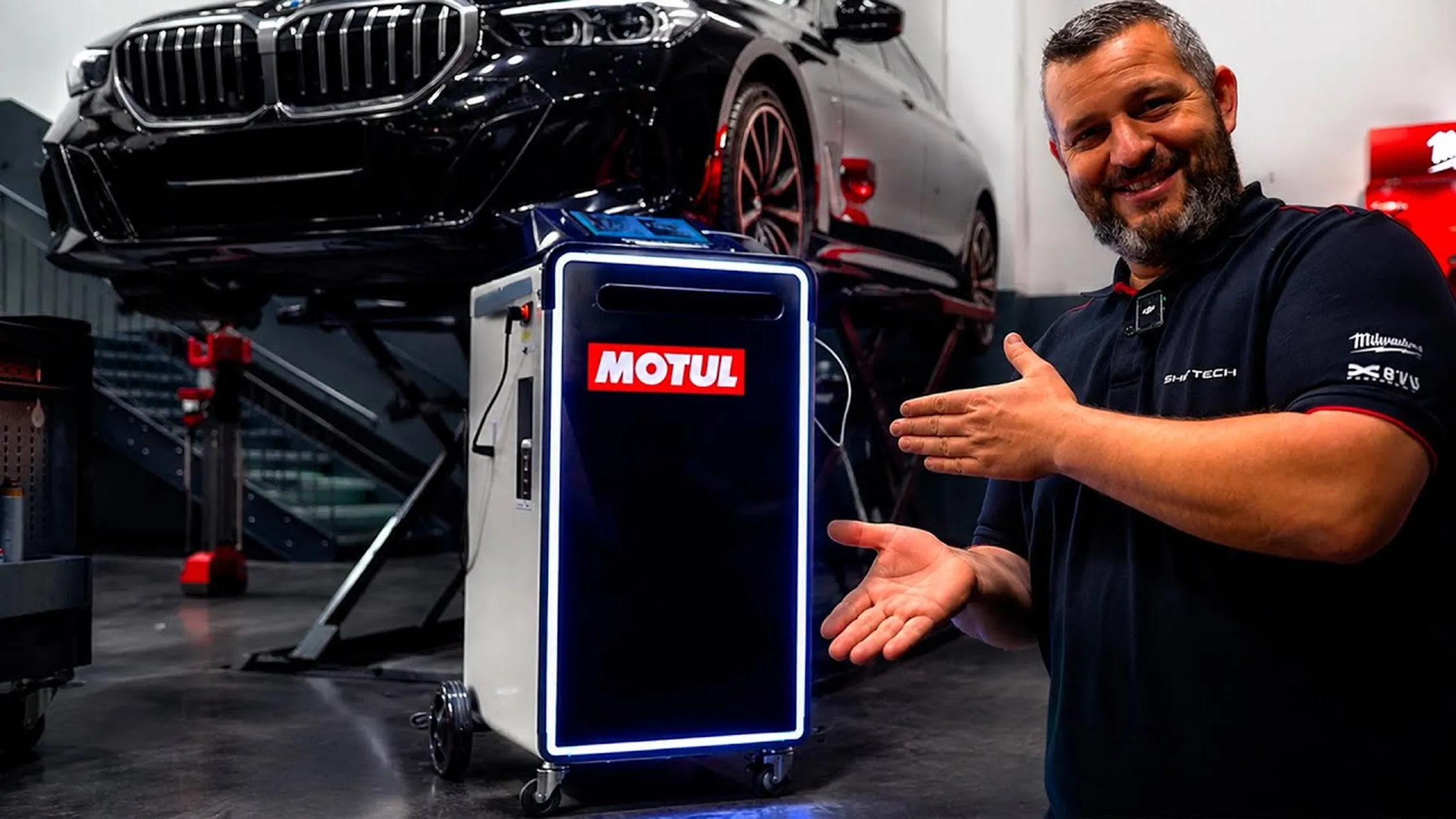
Automatic gearbox draining by machine: how it works and why it's different
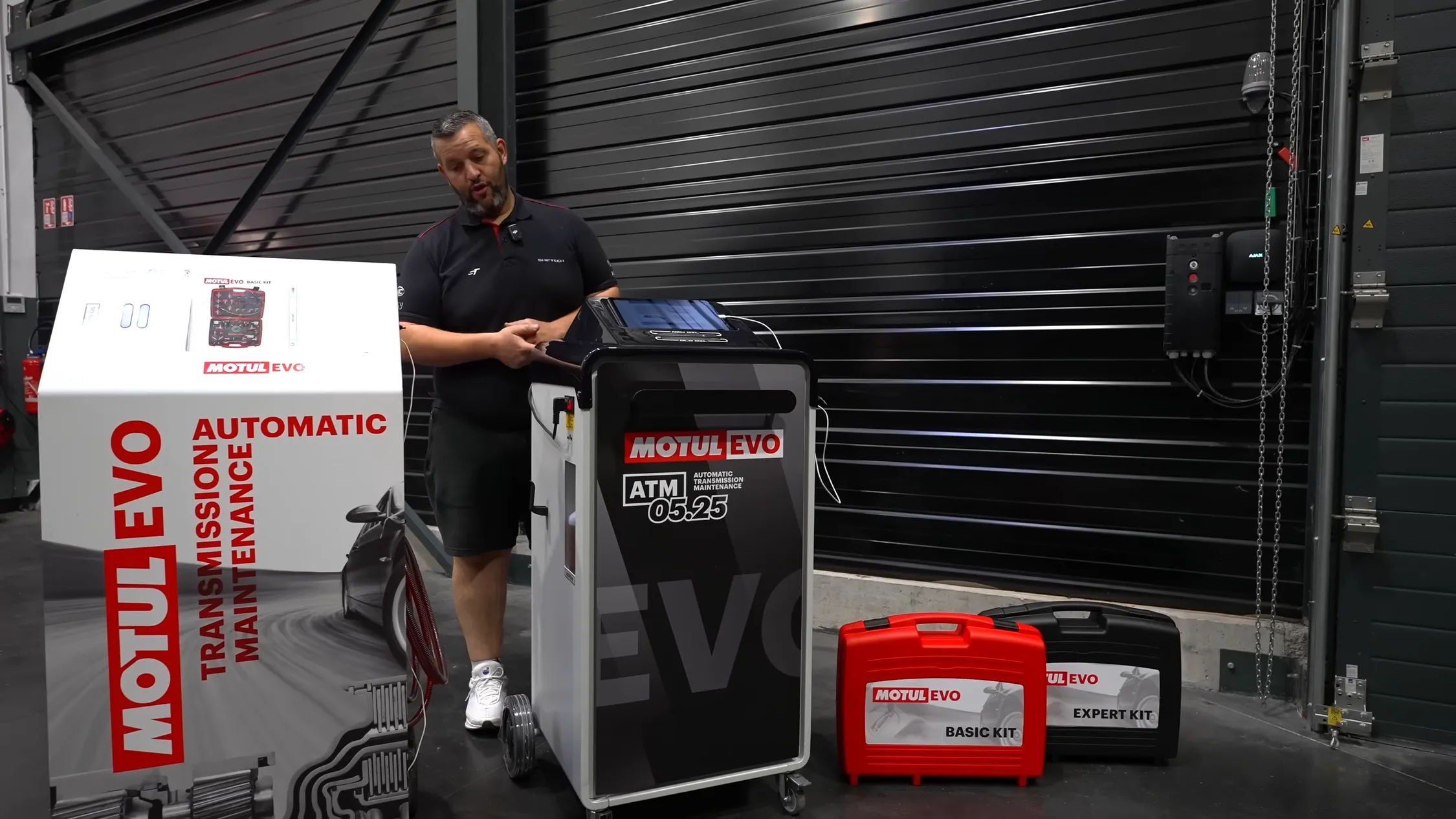
An automatic gearbox oil change by machine replaces 100% of the oil in the system, including the converter, whereas a gravity drain only removes around 50%. Shiftech uses the MotulEvo protocol with its second-generation machine (Motul Evo 5.25): the used oil is extracted, the system is flushed, and then new oil adapted to your gearbox is injected and weighed to the nearest gram to ensure the correct content. The service is available at virtually all Shiftech centres, from €499. Here we explain how the operation is carried out, what is inspected during the procedure, and when this method is required.
Why an automatic gearbox needs an oil change
Most European manufacturers do not recommend gearbox oil changes in their standard maintenance plans. Some even go so far as to talk about 'lifetime' oil. This is not a technical argument, it's a commercial one.
Automatic gearbox oil heats up just as much, if not more, than engine oil. It is loaded with metal particles from the multi-discs, the torque converter and the gearbox. Unlike engine oil, it is not consumed and cannot be seen dropping into the tank, making its deterioration invisible. The result, over time: jerky gear changes, hesitant cold-shifting and accelerated wear of internal components.
Shiftech recommends an oil change every 60,000 to 90,000 km. Under heavy use (sporty driving, regular towing, intensive urban journeys), the figure is closer to 40,000 to 60,000 km. If you don't know the maintenance history of a recently acquired vehicle, an oil change is essential without waiting for the mileage.
What happens inside: the casing, the magnets, the filter
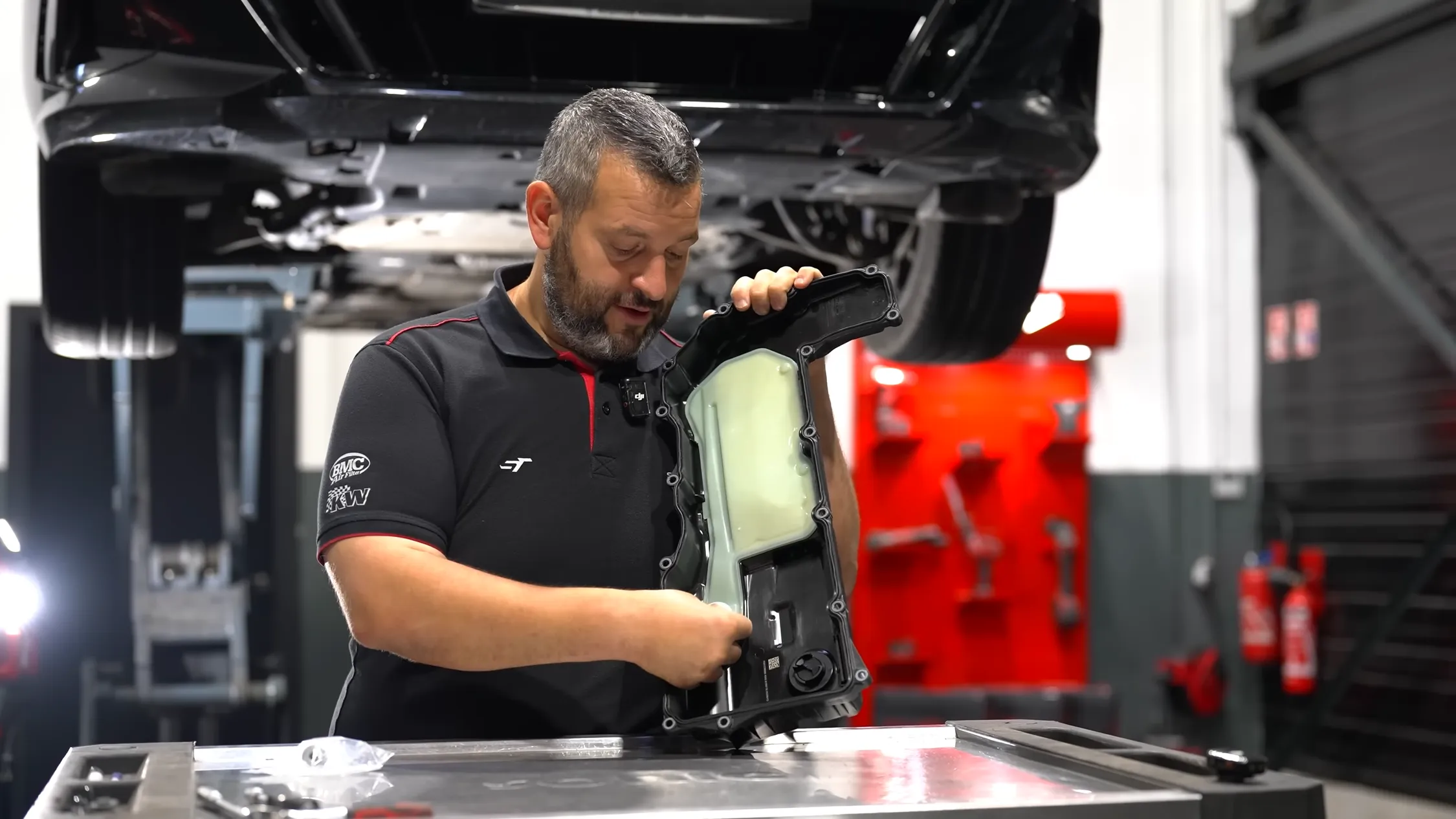
Before plugging in the machine, the underside of the gearbox is stripped. The crankcase is removed. inside, four magnets constantly pick up particles suspended in the oil: it's normal to find a fine friction deposit, the result of gradual wear of the discs. What's not normal is to find metal shavings or copper, a sign that something has come loose. If this is the case, don't continue: an oil change won't save a gearbox that is already mechanically damaged.
The strainer filter is systematically replaced if the can gives access to it. On some modern gearboxes, the strainer is built in and cannot be replaced: this is one of the criteria that can lead to draining by gravity rather than by machine (more on this below). The crankcase is reassembled and tightened to the correct torque using original parts, including gaskets. Adaptable parts should be avoided for this type of work: a leaking gearbox housing is expensive to repair.
Machine vs gravity: the concrete difference
Gravity draining involves opening the crankcase plugs and letting the oil drain out. It's simple, but it doesn't do everything: the torque converter, hydraulic unit and internal circuits retain the old oil. The result is a partial replacement, of the order of 50% of the total volume at best.
The machine oil change works differently. Once the sump has been removed and reassembled, the machine connects to the gearbox cooling circuit. It injects new oil at the inlet and collects used oil at the outlet. The flow passes through the converter, the hydraulic unit and the entire circuit. The machine weighs the recovered oil and the injected oil in real time: we know exactly how much has been extracted and how much has been injected, to the nearest gram, with no guesswork.
An intermediate rinse is carried out during the cycle. The machine indicates by a colour change on the interface when the extracted oil starts to lighten, a sign that the circuit is clean. An additional forced rinse can be triggered manually if required.
Once the cycle is complete, the final levelling is carried out with the engine running, passing the selector through each position (P, R, N, D) so that the oil circulates through all the drawers. The level is checked under temperature conditions and validated by the machine before the procedure is completed. The machine even compensates for the few millilitres lost when the connectors are disconnected, by automatically topping up the final level.
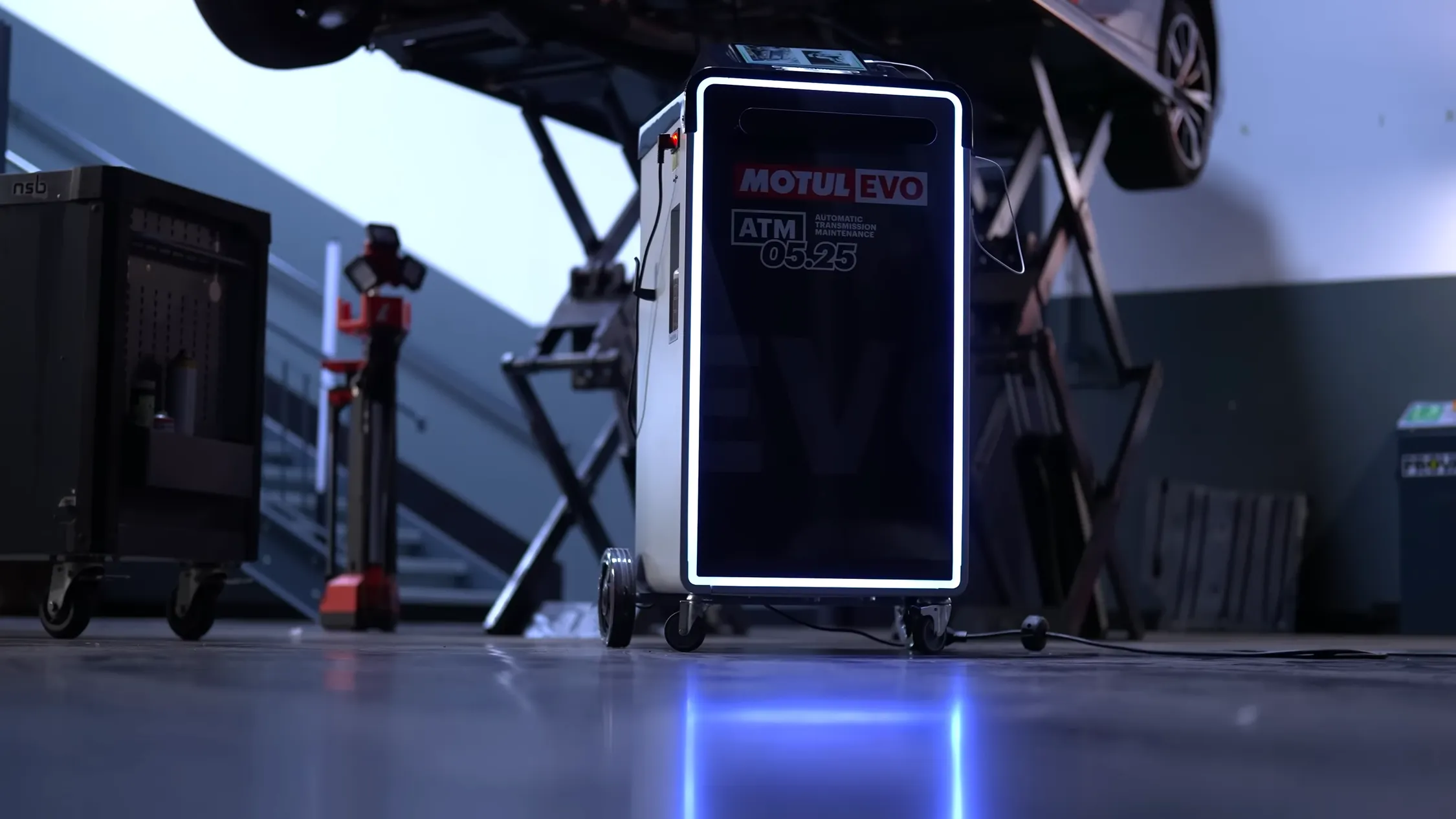
The MotulEvo Evo 5.25: the second-generation machine
Shiftech has been using the MotulEvo protocol for several years. The second generation of the machine, the Evo LED 5.25, is now being deployed in our centres. The changes are real, not cosmetic.
The working pressure is higher, which improves rinsing efficiency and removes residues from less accessible areas of the circuit. The hoses have been reinforced accordingly. The interface is controlled from an integrated tablet with a dedicated stand: the oil dipsticks are visible directly on the machine, the status of each phase is indicated by a colour code, and the levelling procedure is guided step by step.
The fittings have been reworked. This is a detail that counts in the workshop: a fitting that is poorly adapted to the pressure of the machine means oil spillage. The adapter kits are classified by part number, accessible from the tablet, and can be ordered directly from the interface if a part is missing.
The machine also includes access to a tutorial academy and technical support available via WhatsApp for non-standard cases.
Motul has published a blacklist of boxes that are incompatible with the machine, either because the fittings are difficult to access and would require too much dismantling, or because a non-return valve in the mechatronics prevents closed-circuit circulation. On these boxes, gravity drainage is still used, which is preferable to no maintenance at all.
What draining doesn't solve
A gearbox oil change in good condition is preventive maintenance. It does not repair a gearbox that already has clear mechanical symptoms: persistent slippage, hard shocks when changing gear, transmission warning light on, abnormal temperature displayed. In these cases, an oil change may temporarily mask a problem that needs to be diagnosed.
That's why the procedure always begins with an inspection of the crankcase and magnets. We do not continue if the contents of the crankcase indicate internal damage.

How much does it cost and where can it be done?
The service is available from €499 in Shiftech centres equipped with the MotulEvo machine. The final price depends on the model: the cost of the strainer filter and sump cover varies according to the gearbox. On some vehicles (BMW ZF gearboxes, for example), original parts account for a significant proportion of the bill. Original parts for a BMW 5 Series cost just under €300, in addition to labour and machine protocol.
Almost all Shiftech centres are equipped. The service includes inspection of the crankcase, replacement of the filter if accessible, the complete machine cycle, temperature adjustment and a validation test drive at the end of the service.
To find out the exact price for your vehicle and make an appointment, visit the Shiftech gearbox servicing page or go directly to the page for your centre.
Protect your gearbox
Youtube


