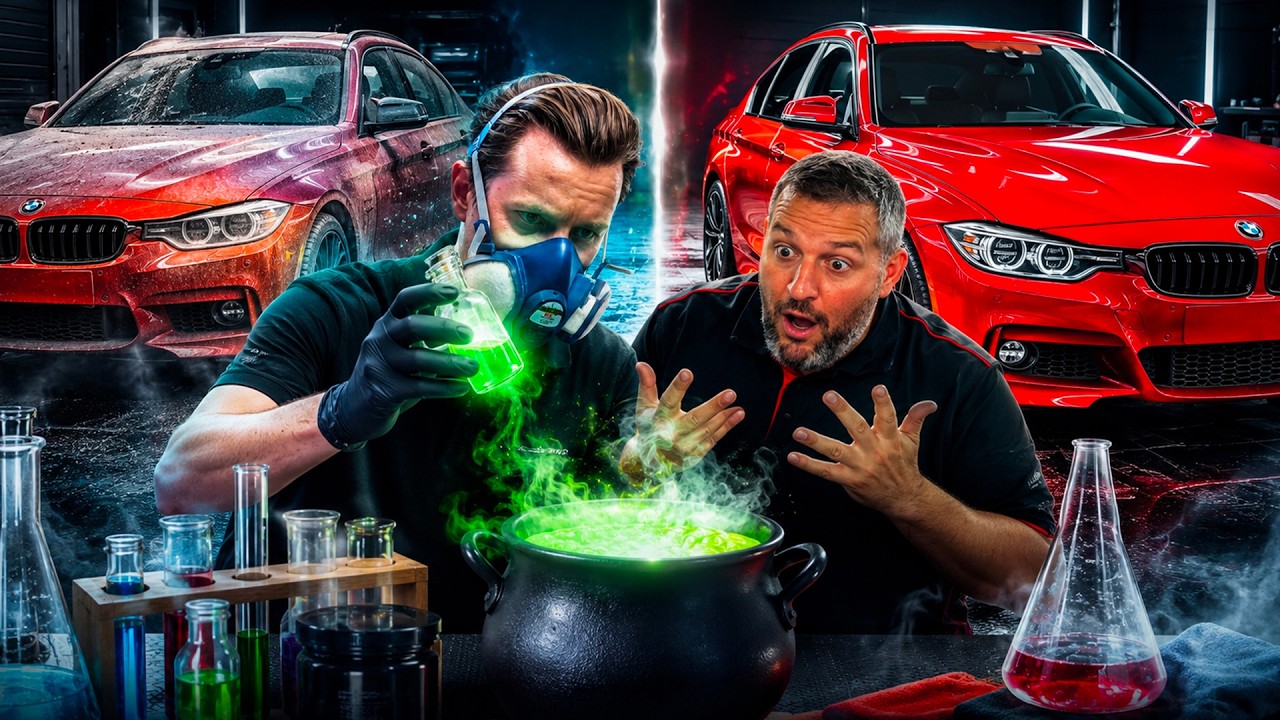
Car paint restoration: what the RestorFX process actually fixes
A BMW 3 Series, a Golf GTI, a second-hand Audi A4: the bodywork has taken a beating. Micro-scratches from washing, paintwork oxidised by UV rays, loss of depth in a metallic finish that looked magnificent when wet. Before considering a full repaint costing several thousand euros, or settling for a polish that merely scratches the surface, there is a third option offered by Shiftech at its centres: the RestorFX process, also known as VSP (Varnish Without Spray). The principle: recoating the surface rather than sanding it down, using a two-component clear coat that chemically bonds with the original clear coat. In this article (based on our YouTube video available at the end of the article), we explain how the process works, the defects it can actually correct, those it cannot fix, and the results you can expect. No exaggeration.
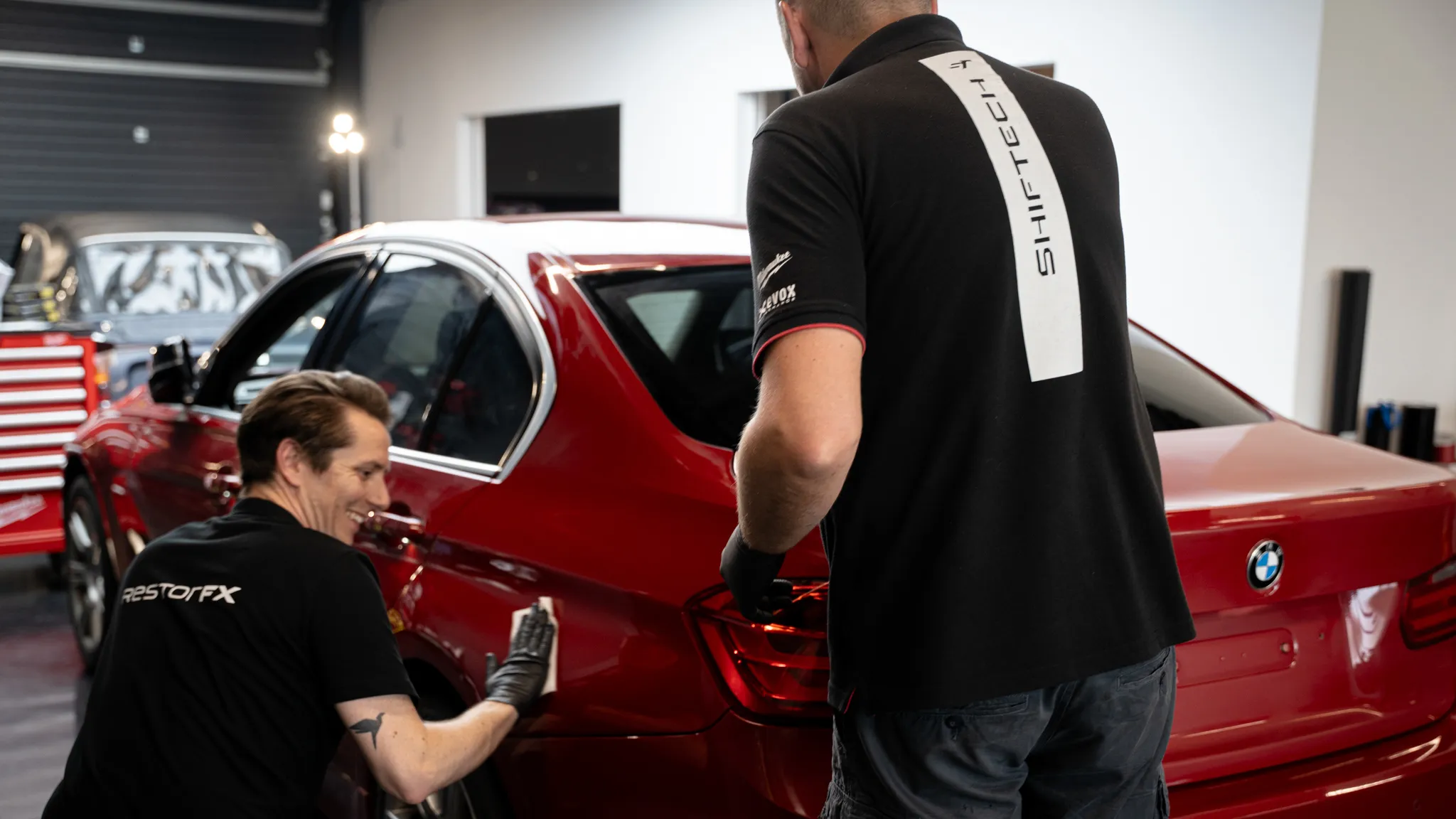
3 ways, different costs
Polishing, full repaint, RestorFX: three different approaches
When a vehicle’s bodywork has been damaged, you have three options.
Polishing mechanically abrades the surface of the paintwork to remove micro-scratches. It works its way down into the material to reveal a cleaner layer. This is effective when the paintwork is still thick enough, but the method weakens it with every pass. A paintwork that has been sanded down several times ends up too thin to be repaired, and the UV protection it provides diminishes along with it.
A full repaint by a bodywork specialist is necessary when the damage affects the base coat or the underlying structure. The cost of a professional full repaint generally ranges from 3,000 to 8,000 euros for a whole vehicle. And even this result does not guarantee a finish identical to that when the car left the factory.
The RestorFX process falls between these two approaches. Rather than removing material or completely covering the surface, a new clear coat is applied. A two-component clear coat (VSP) is applied directly onto the original clear coat, following thorough preparation of the surface. This adds approximately 20 microns, half of which chemically bonds with the existing clear coat, whilst the other half remains as an extra layer to fill in surface imperfections. The result is a long-lasting restoration of gloss and colour depth, without affecting the base coat.
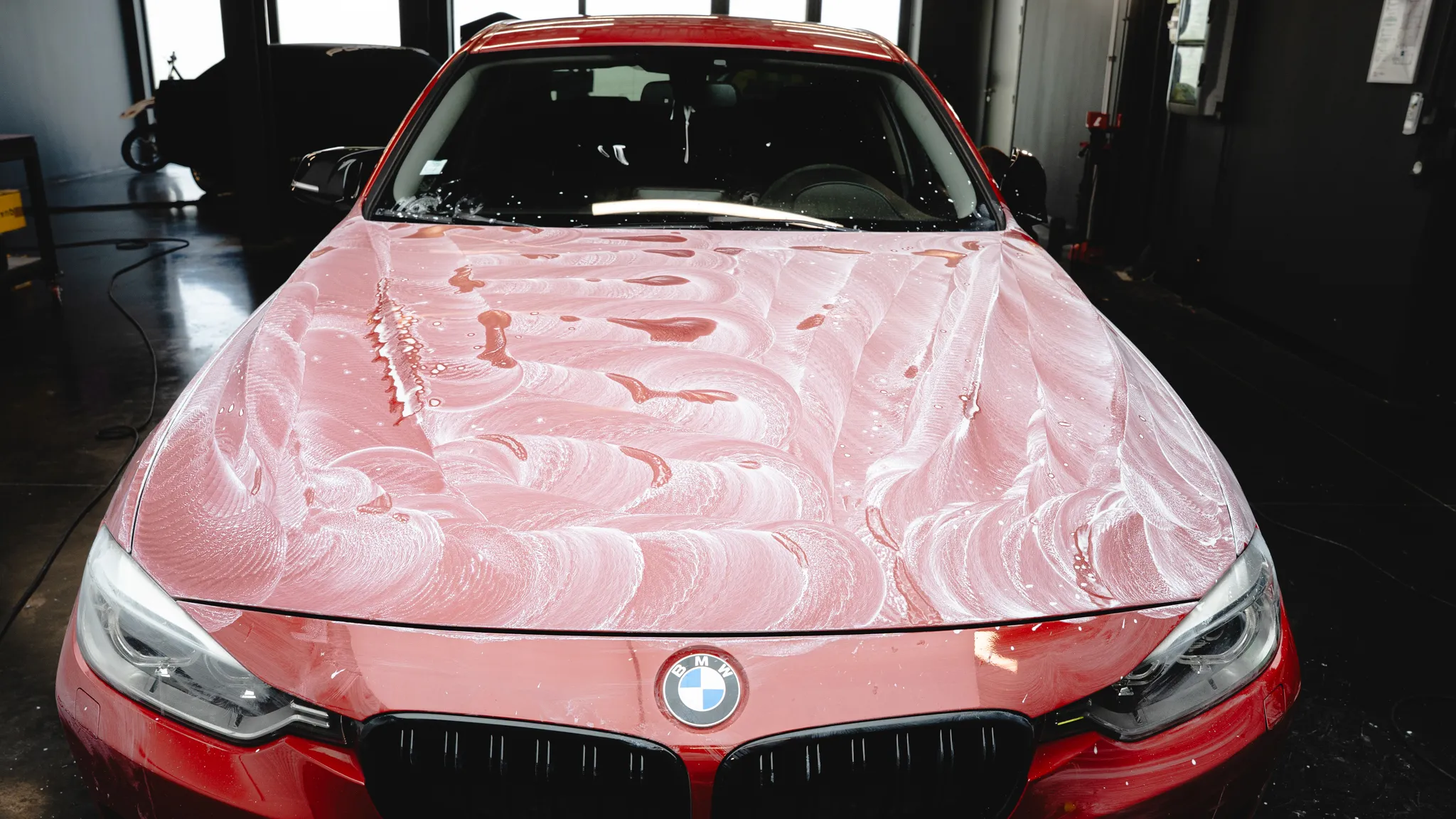
The stages of the process in detail
Mechanical preparation
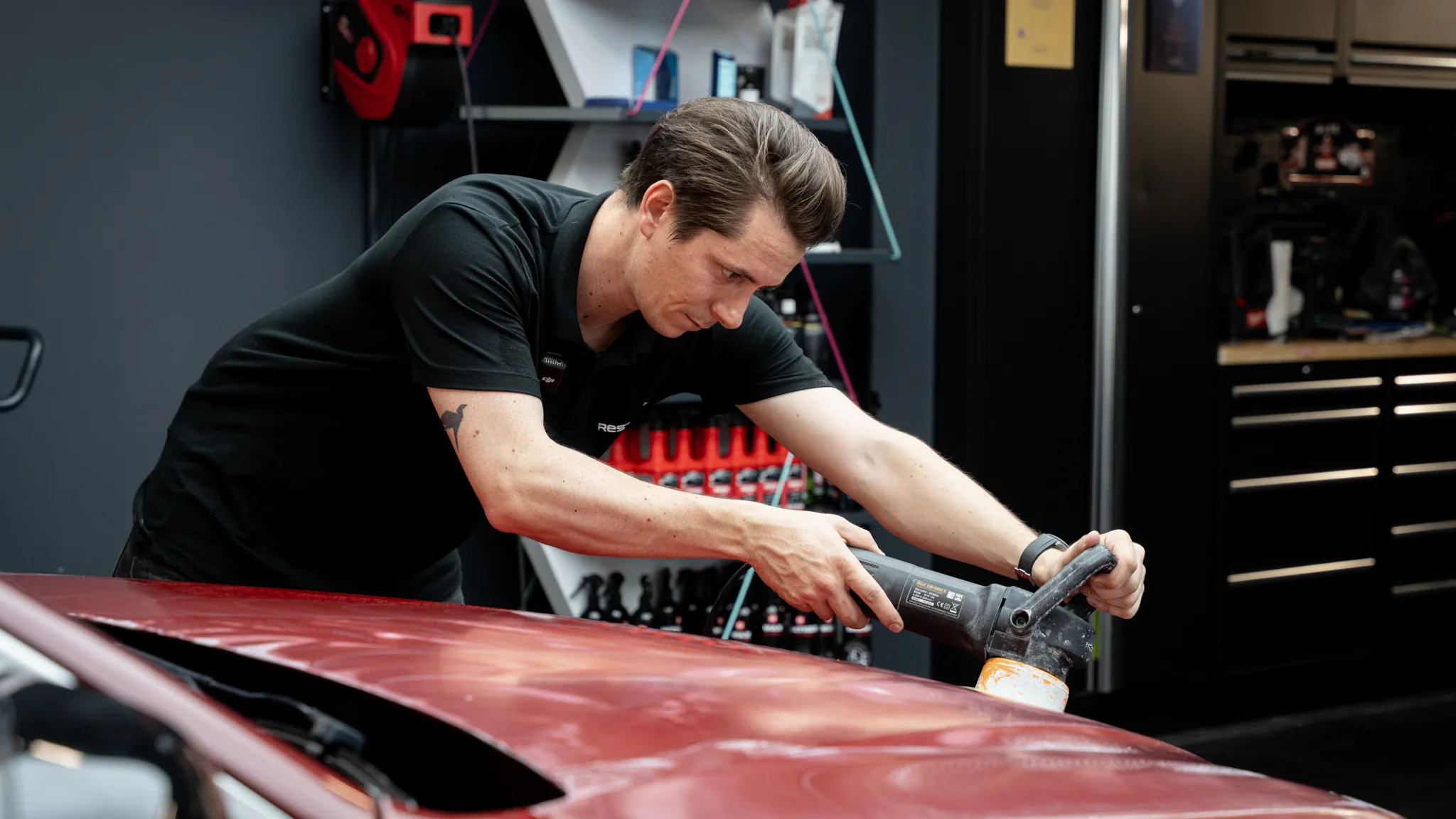
The bodywork is thoroughly decontaminated: tar, silicone, wax and any other residue that could prevent the paint from adhering properly is removed. The surface is then sanded to remove traces of oxidation and ensure a uniform finish. At this stage, the bodywork temporarily loses its shine and may appear duller than when it arrived. This is to be expected.
Chemical activation
Once clean and dry, the surface is treated with an activator which opens the pores of the original clear coat. It is this step that determines the chemical bonding of the VSP: without it, the new clear coat will not bond properly; it will simply sit on top.
Applying the clear coat
VSP is a two-component product mixed in equal parts, available in several formulations depending on the bodywork temperature at the time of application. Choosing the correct kit ensures sufficient application time to work without the product drying prematurely. The clear coat is applied by hand over the entire surface. It must be left to dry overnight before refitting any removed parts (lettering, plates, logos). The vehicle must be left completely undisturbed for 24 to 48 hours.
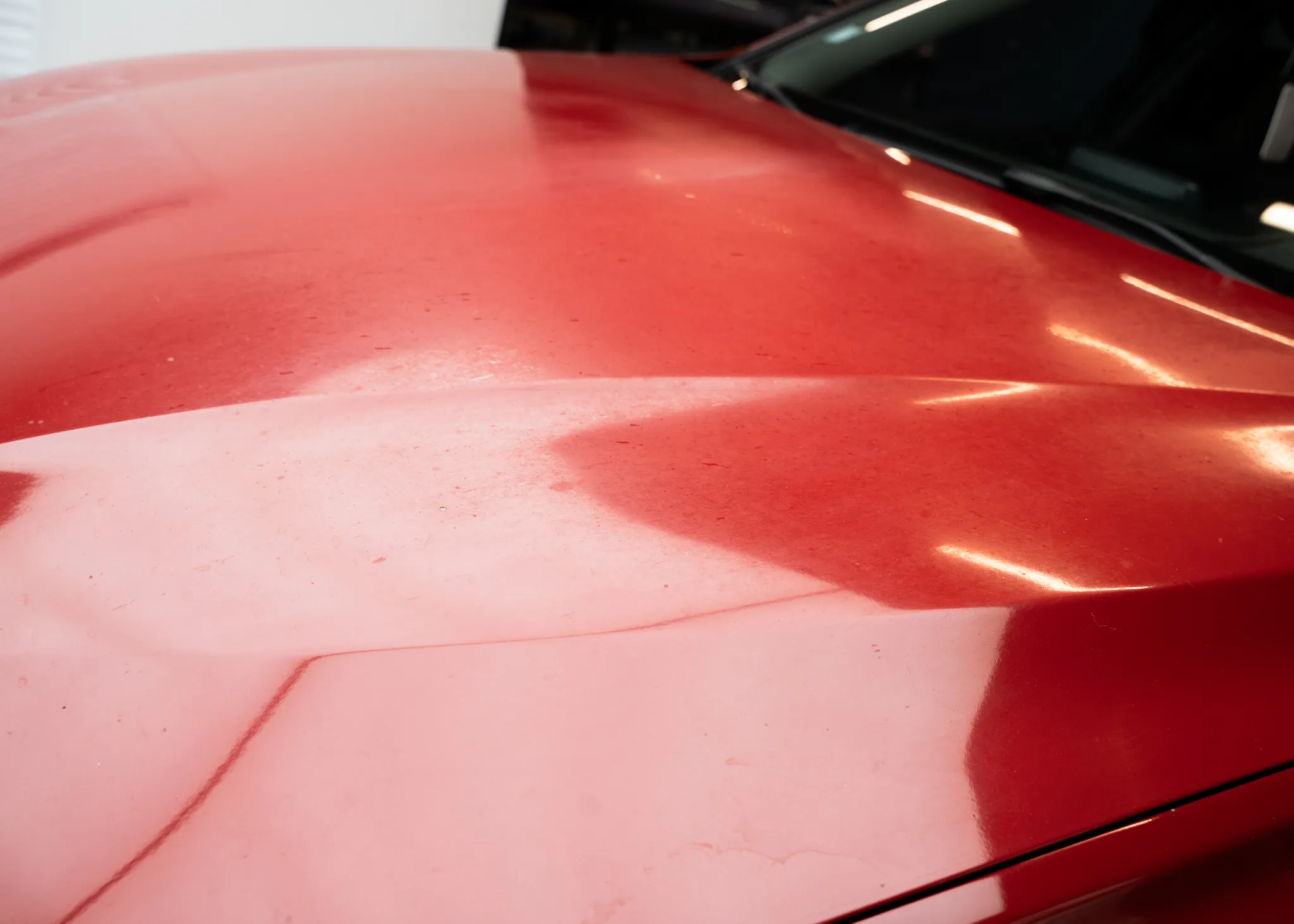
What RestorFX can fix
RestorFX treats all imperfections that remain in the clear coat, without penetrating the base coat.
Micro-scratches caused by roller washing, dry wiping or light rubbing disappear in the vast majority of cases. Superficial scratches that cause the clear coat to turn white without exposing the colour underneath are repaired or significantly reduced: this whitening is merely damage to the clear coat, not the coloured base coat. The loss of gloss and dull appearance caused by oxidation and UV exposure are corrected, with an immediately noticeable restoration of colour depth upon delivery. On a metallic finish, the effect is particularly striking: the texture of the metallic flakes is restored.
Furthermore, the applied clear coat has a higher hardness than most current standard clear coats, comparable to those of the 1980s and 1990s. On newer vehicles with thin, flexible factory paints, RestorFX offers an additional benefit: improved resistance to the micro-abrasions of everyday use. This also applies to electric vehicles, some of whose manufacturer paints show signs of wear particularly quickly.
What RestorFX cannot fix
This point bears repeating.
If the clear coat has blistered and is starting to peel away, the VSP cannot adhere to it permanently. There is a risk that the unstable base coat will be removed along with the new clear coat. These areas must be treated using traditional bodywork methods before any RestorFX treatment is carried out.
If damage has penetrated the clear coat and reached the base coat, the overall gloss will be restored, but the area without a base coat will remain visible: the shine of the clear coat will be visible, but not the colour underneath. A touch-up with paint remains the only solution for these specific areas.
Mechanical deformations (dents, impacts, dented bumpers) are not addressed by this process.
Poor-quality repainting, with visible excess clear coat around badges or in overlapping areas, can be reduced by localised sanding but cannot be completely removed.
Compatibility and possible combinations
The process is compatible with all types of paint finishes: high-gloss, metallic and pearlescent. It can be used on all types of vehicles, from passenger cars to commercial vehicles, motorbikes and campervans.
Two questions often come up among owners who wish to combine these services.
Can PPF be applied after RestorFX? Yes, provided you allow a minimum of 15 to 21 days for the clear coat to fully cure. It’s a logical combination: RestorFX restores the paintwork to its original condition, whilst PPF then provides long-lasting protection. Shiftech offers both services.
In the event of subsequent damage, a bodywork treated with RestorFX can be repaired using traditional bodywork methods without any issues. The VSP behaves like a conventional clear coat for the bodywork specialist, with no surprises or particular constraints.
What it costs, and what it’s worth
For a full vehicle, the RestorFX service at Shiftech starts at around 600 euros for a small city car and is around 900 euros for a mid-size SUV. For the vast majority of vehicles, the cost remains below 1,000 euros.
By way of comparison, a full polish carried out by a professional costs between 200 and 600 euros, depending on the size of the vehicle and the number of passes required, without the addition of any material – meaning there is no increase in hardness and no restoration of defects that have penetrated several layers. A full bodywork repaint starts at 3,000 euros and often exceeds 5,000 euros for a medium-sized vehicle.
For an owner who has invested in a vehicle with high residual or sentimental value – such as a BMW, a Golf R or an Audi RS bought second-hand with a paintwork that has suffered – the value for money offered by RestorFX is hard to beat before considering a long-term protection treatment.
The warranty covers the long-term durability of the coating: the VSP must not delaminate, peel or flake off. It does not cover mechanical damage occurring after application.
As for maintenance, the rules are the same as for a new coating: hand washing or high-pressure hosing; automatic car wash rollers and abrasive sponges must be avoided. Rigorous maintenance ensures the result is preserved over the long term.
To find out more about Shiftech’s beauty services:
A BRAND-NEW BODY FOR LESS THAN €1,000!!
Learn more
View articles
Similar


