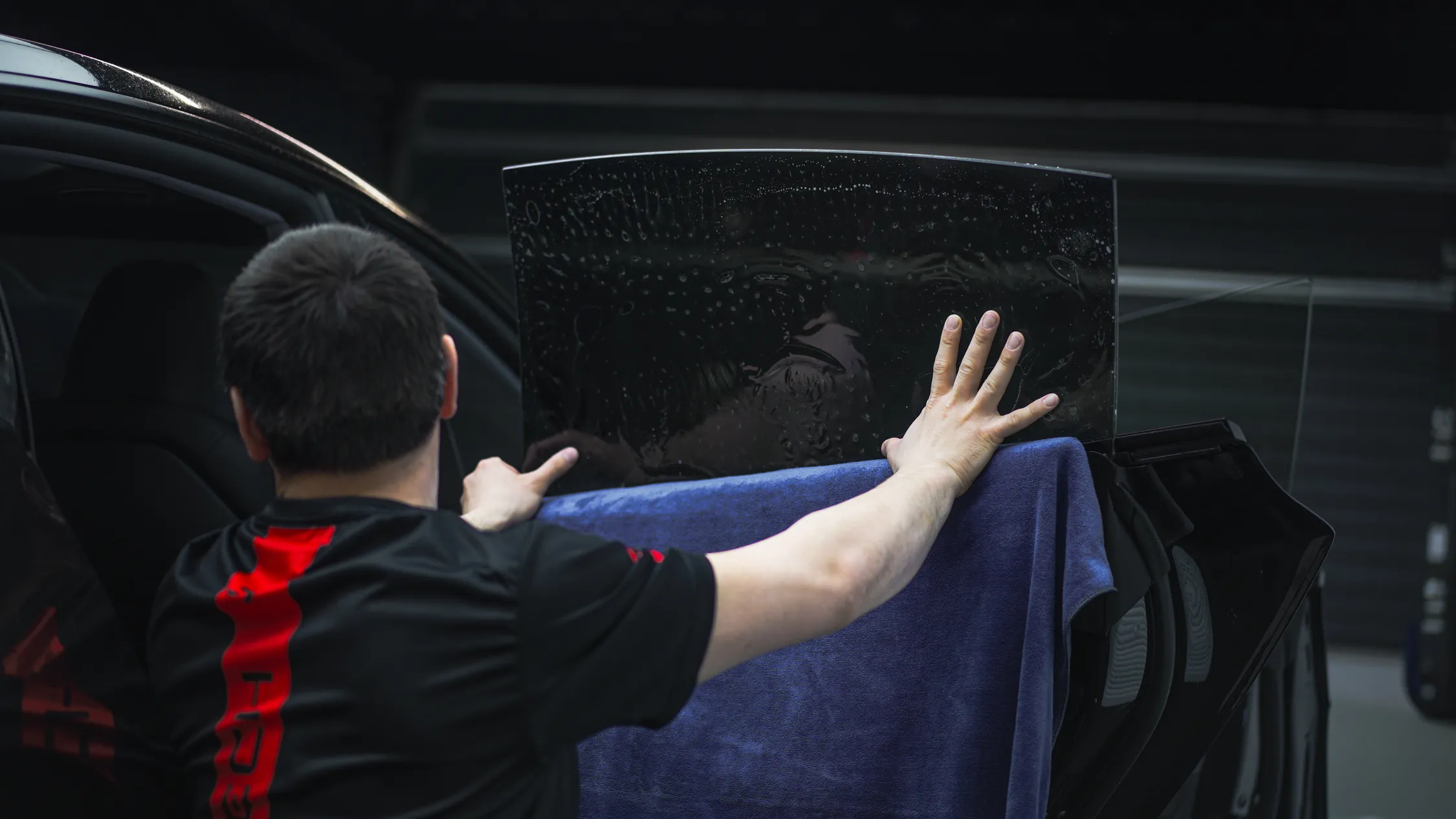
Solar film for cars: the anti-heat weapon for this summer
The essentials in 30 seconds
A passenger compartment can reach 70°C in direct sunlight. A professional solar film reduces this (perceived) temperature by 15 to 25°C, rejects up to 50% of the sun's energy and blocks 99% of UV rays (working 365 days a year, even on cloudy days). The difference between a DIY film bought from a supermarket and one installed in a specialist centre is radical, both in terms of thermal performance and lifespan. from £149 from Shiftech, including installation and warranty.
You return to the car park after an hour on the terrace. You open the car door. You're greeted by a wave of heat - 60, 70°C inside, a scorching dashboard, a steering wheel that's impossible to touch, seats that stick. The air conditioning runs at full blast for ten minutes before the air becomes breathable. You know this scenario by heart.
What many people don't know is that there is a passive, permanent and totally legal solution to this problem: professionally fitted solar film. Not a plastic sunshade that slides off as soon as you drive off. A high-performance window treatment film, applied directly to your windows, that works 365 days a year, even when you're not in the car.
Why does your car overheat so much?
The principle is simple: your windows act like a greenhouse. They let in solar radiation - visible light, ultraviolet and infrared - but block the far infrared radiation emitted by the hot objects inside. Heat comes in easily, but goes out very badly.
The result: a car parked in direct sunlight at 30°C outside can reach 70°C inside in less than an hour, and exceed 85°C on the dashboard. These temperatures are not just anecdotal. They cause accelerated aging of plastics, cracking of leather, discoloration of upholstery, and represent a real danger to children or animals left in the vehicle for a few minutes.
But visible heat is not the only problem. UV rays - invisible rays - penetrate standard glass and attack your skin on every journey. Regular drivers are exposed to this every day, often without realising it, with documented consequences for skin aging and the risk of lesions on the driver's arm.
How solar film combats the heat
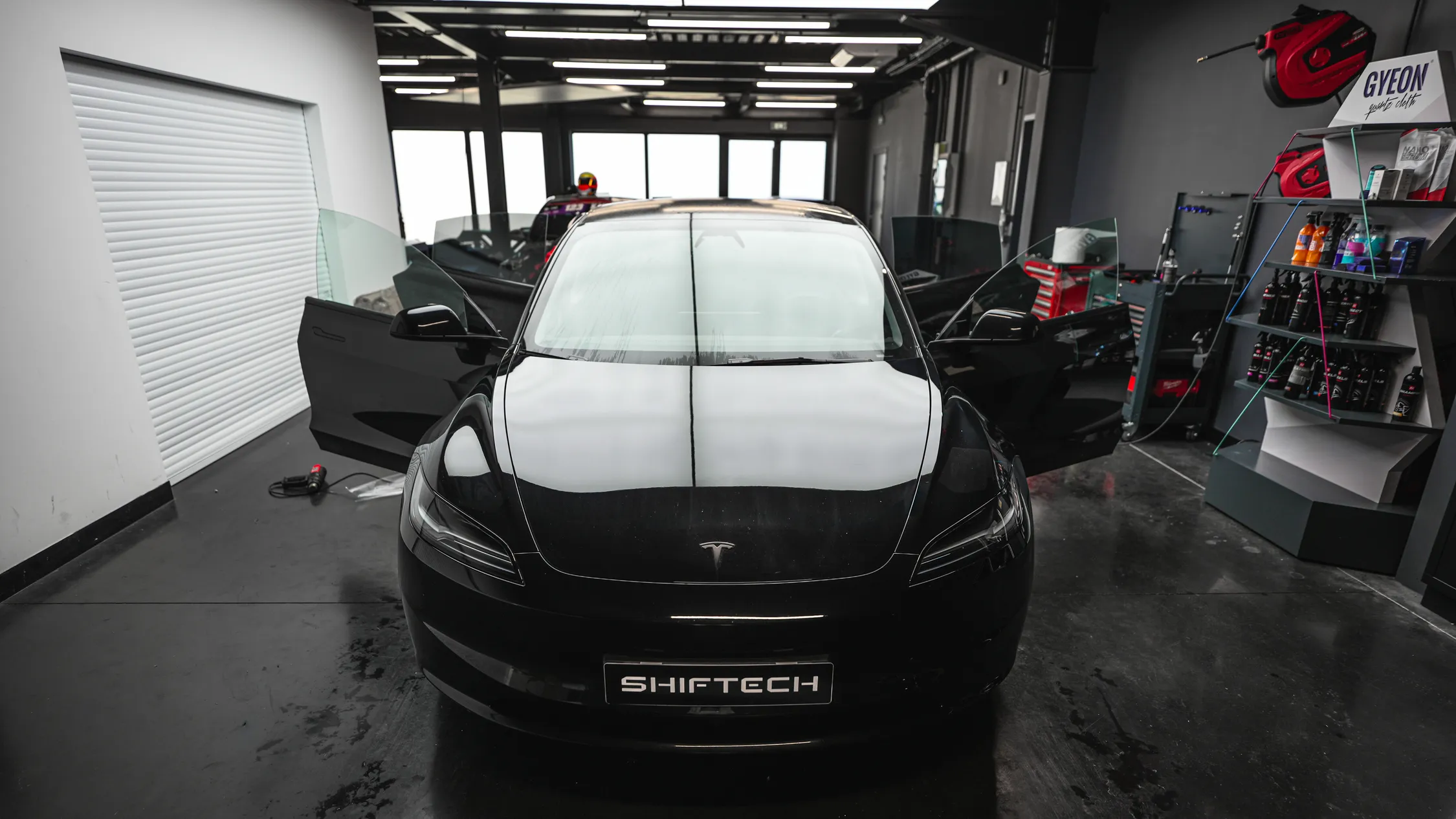
A professional-quality solar film is not just a colored film. It is an assembly of several functional layers - up to seven to nine depending on the technology - whose role is to control the radiation entering the window, before it is transformed into heat in the passenger compartment.
In practical terms, these reflective and absorbent layers target two categories of radiation:
Near infrared radiation, which is responsible for the heat felt. Professional films reject a significant proportion of this radiation before it enters the passenger compartment. This thermal rejection (expressed in TSR, Total Solar Rejection) is the true indicator of a film's performance against heat. A high-performance professional film can reject up to 50% of total solar energy.
Ultraviolet rays, responsible for damage to skin and materials. All quality solar films block 99% of UV rays, including very light, virtually transparent films. UV protection is therefore active whatever the tint chosen, and works even on cloudy days.
The result in real conditions: a reduction of 15 to 25°C in the temperature felt in the passenger compartment, depending on the type of film, the glass surface treated and the vehicle's exposure.
DIY film vs. professional film: a difference that changes everything
This is where most motorists go wrong. They buy a roll of tinted film from a supermarket or online - Action, Norauto, Amazon - and think they'll get the same performance as a specialist centre. This is not the case, and for a very specific technical reason.
The films sold in consumer kits are polyester dye films. Their operating principle is based on the absorption of light by the dye. The problem is that a material that absorbs light also absorbs heat. The glass becomes hotter, and some of this heat radiates towards the interior. The thermal effect is slight or non-existent, and can even be slightly counter-productive on very dark tints.
The films used in professional centers incorporate metallic or nanoceramic functional layers that reflect infrared rays rather than absorbing them. They are real thermal shields, not simple light filters.
The difference can be measured. Comparative tests carried out under the same conditions have shown that tinted windows - or a basic film - provide a gain of just 0.5 to 1°C in the passenger compartment. A professional film treatment provides up to 3.7°C extra gain under the same conditions. On a car parked at 65°C inside, this is the difference between 64°C and 61°C on the one hand, and 61°C versus 46°C on the other.
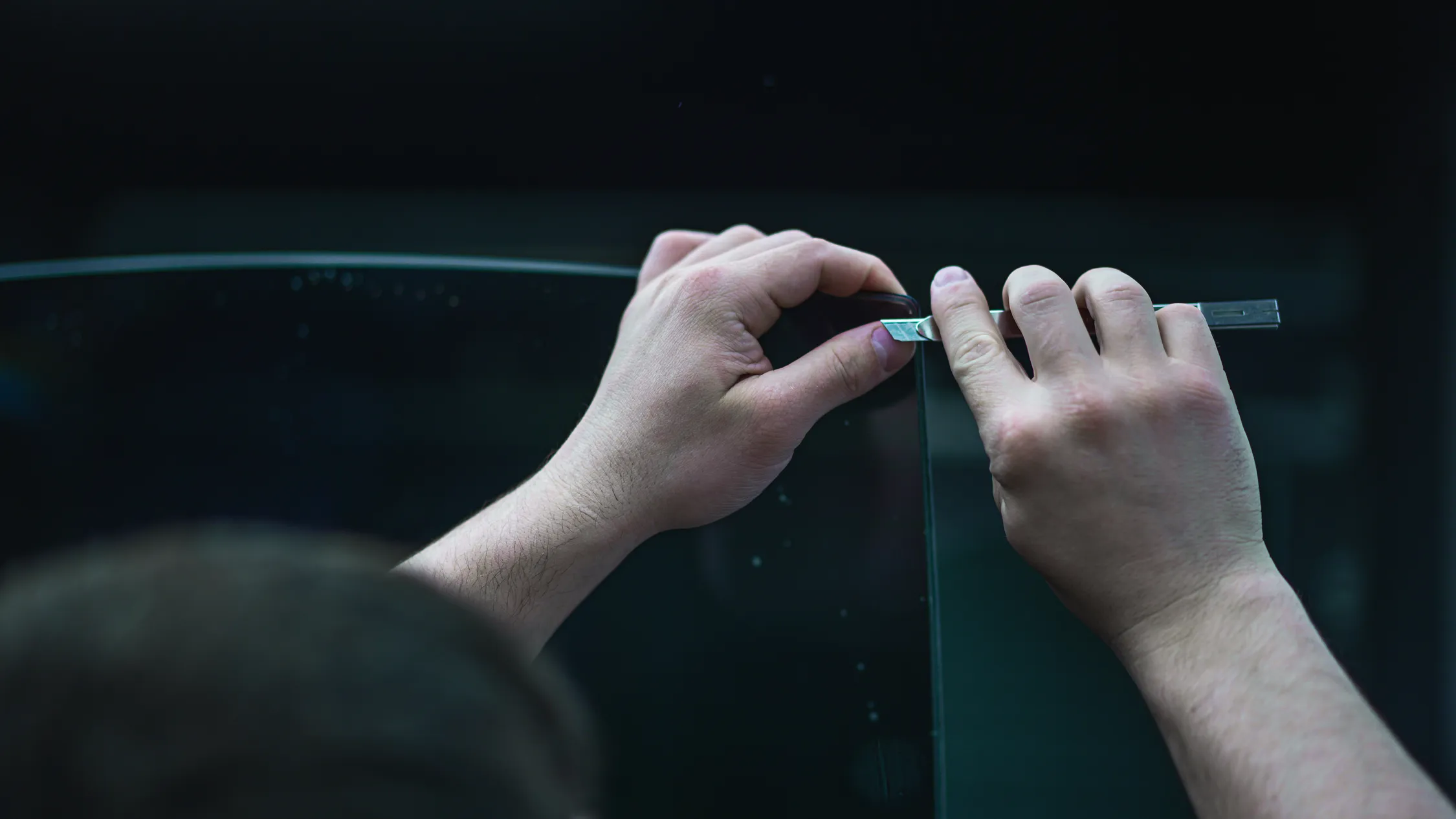
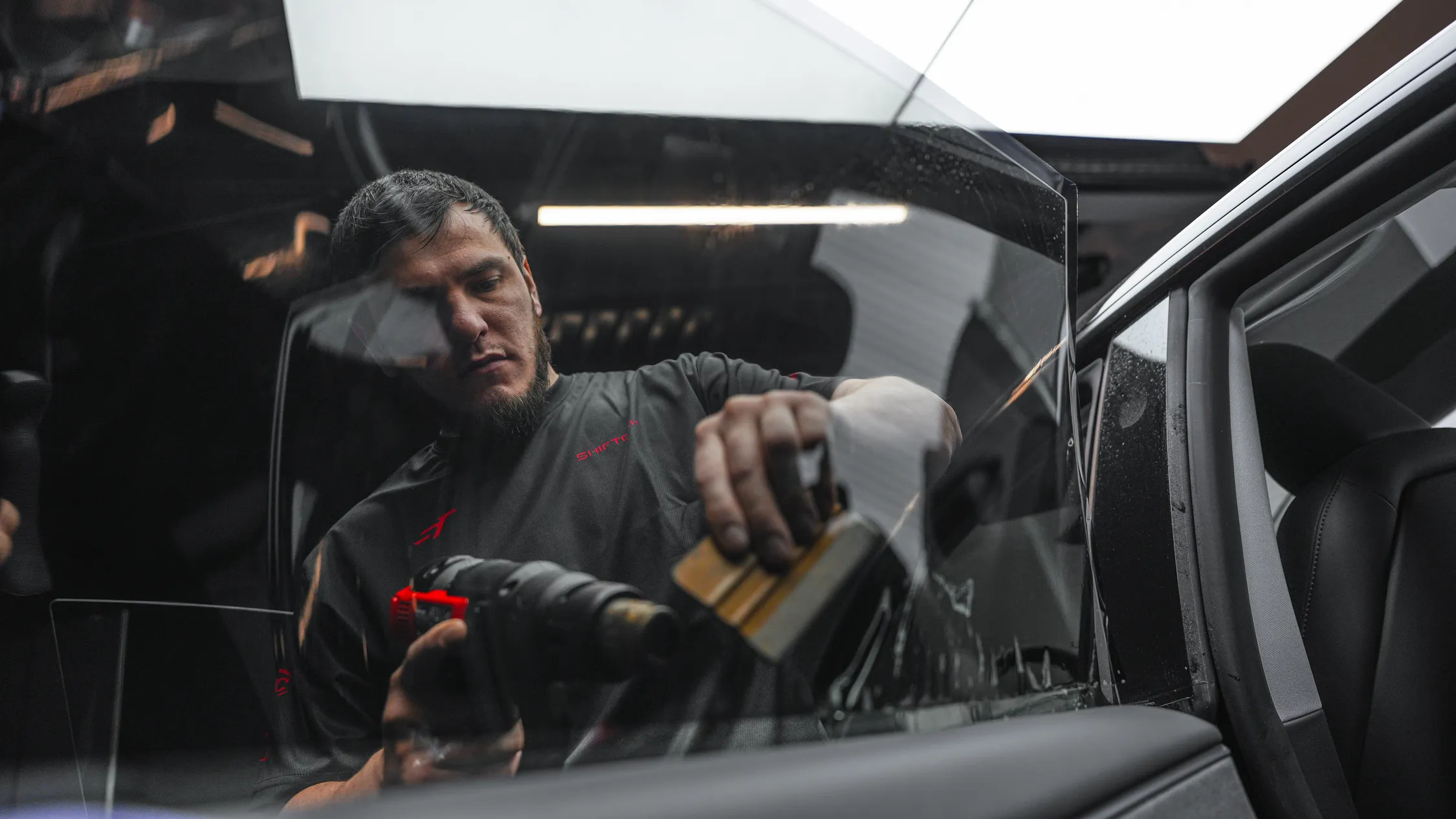
Then there's the question of installation. Poorly applied film - air bubbles, partial peeling, film not thermoformed on curved glass - loses much of its thermal efficiency. At Shiftech, each film is cut to size for your vehicle and thermoformed to fit the curvature of each window perfectly. The result is total adhesion and maximum efficiency.
DIY vs Professional comparison chart
| DIY film (large area kit) | Professional film (Shiftech centre) | |
|---|---|---|
| Technology | Polyester dye (absorbs heat) | Nano-ceramic or multi-layer metallised (heat rejection) |
| Heat rejection (TSR) | Low - can increase glass temperature | Up to 50% of solar energy rejected |
| Reduction in cabin temperature | 0.5 to 1°C | 15 to 25°C |
| UV protection | Varies according to quality | 99% blocked, approval guaranteed |
| Electronic compatibility | Not tested | Guarantee (nano-ceramic) |
| Legal compliance | Not verifiable | 70% TLV guarantee on front glass |
| Service life | 1 to 3 years (yellowing, bubbles) | 5 to 10 years depending on the film |
| Installation | Hand-cut, risk of bubbles | Made to measure, thermoformed, no bubbles |
| Price | 20 à 80€ | from €149 including fitting and guarantee |
The impact on your air conditioning and energy consumption
Solar film does not actively cool your car. That's not its role. Its role is to act as a passive thermal barrier that limits the speed at which heat penetrates the passenger compartment.
In practical terms, this changes two important things.
Firstly, the temperature of your car does not rise as high when parked. Instead of finding 70°C when you open the door, you find 50 or 55°C - still warm, but the air conditioning reaches a comfortable temperature twice as fast.
Secondly, during the journey, your air conditioning works less to maintain the temperature. Less solar heat in the passenger compartment means less strain on the air conditioning compressor, lower fuel consumption on each journey and less wear and tear on the air conditioning system over the long term.
On a vehicle used daily in sunny regions (south of France, La Réunion, Marrakech), the cumulative savings over a season are real and measurable.
Nano-ceramic film or classic film: which should you choose for summer?
Not all solar films are equal in terms of thermal performance. Here are the main types available in professional centres:
Conventional tinted film is made up of dyes embedded in polyester. It offers good UV protection (99%) and good looks, but its thermal rejection performance is limited. It's an acceptable option on a budget, but not the most effective against heat.
Metallised film incorporates metallic particles that reflect infrared rays effectively. Very good thermal performance/price ratio, but may interfere slightly with some on-board electronic equipment (GPS, 4G). ask your technician for advice, depending on your vehicle.
Nano-ceramic film is the benchmark for thermal protection. Its ceramic nanoparticles reject infrared rays without needing to be opaque or dark - a virtually transparent nano-ceramic film can reject more heat than a conventional dark-tinted film. Fully compatible with all electronic systems, superior durability, discreet appearance even on front windows. It's the Shiftech choice for customers who put thermal performance first.
An important point to remember: tint and thermal rejection are two separate parameters. A very dark film is not necessarily the most effective against heat. Your Shiftech technician will advise you on the technology best suited to your needs and to the regulations governing the position of each pane. To find out everything you need to know about authorised percentages and tint levels, consult our complete guide to tinted windows.
Frequently asked questions - Solar film for cars and heat
How much do tinted windows reduce the heat in the car?
With a professional nano-ceramic solar film, the temperature felt in the passenger compartment is reduced by 15 to 25°C and up to 50% of solar energy is rejected. Results vary according to the film chosen, the number of windows treated and the vehicle's exposure.
Do factory-tinted windows protect against heat?
Not at all. Original manufacturer tinted windows provide a gain of only 0.5 to 1°C. A professional film treatment adds up to 3.7°C more under the same conditions.
Does solar film also work in cloudy weather?
Yes, UV rays penetrate clouds and remain active even on cloudy days. The UV protection provided by solar film is therefore permanent, whatever the weather.
Do tinted windows also work in winter?
Yes, solar film acts as thermal insulation in both directions. In winter, it limits heat loss through the windows and reduces condensation inside. The investment pays off all year round.
Does nano-ceramic film interfere with GPS or 4G?
No. Unlike conventional metallic films, nano-ceramic films are fully compatible with all on-board electronic systems: GPS, 4G, reversing radar, electronic toll tags.
Have your solar film installed at a Shiftech centre
Get your free quote!
Learn more
View articles
Similar


