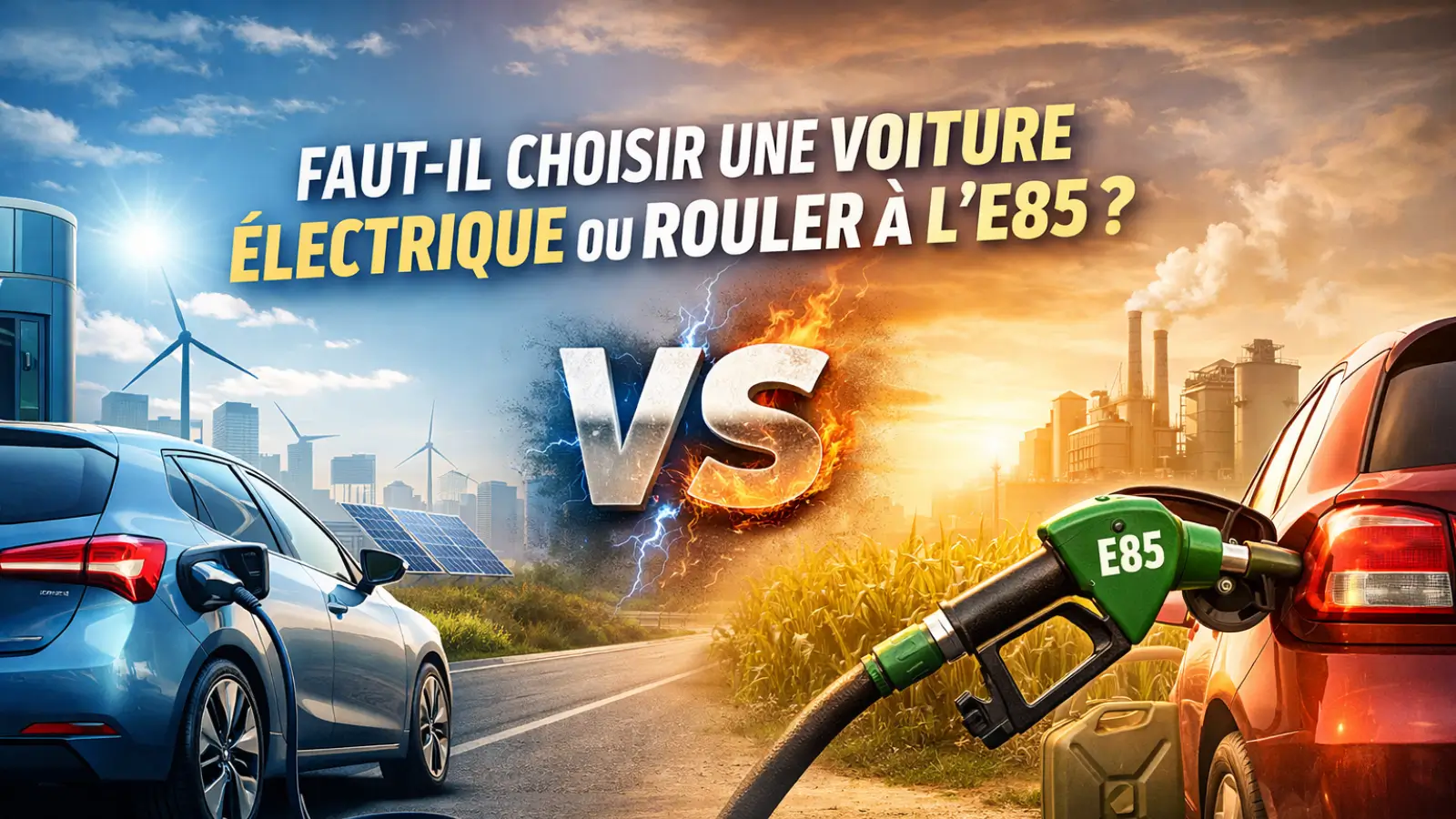
Should you choose an electric car or run on E85?
Faced with ever-rising fuel prices and the challenges of the energy transition, French motorists are looking for alternatives to lighten their car budget. Two options stand out: switching to a 100% electric car, or converting your petrol vehicle to run on superethanol-E85. But which of these two solutions is really best for you? And which is the most cost-effective?
As a specialist in engine reprogramming and ethanol conversion, Shiftech offers you a comprehensive and honest comparison. We will analyse each option according to essential criteria: cost, range and everyday use, to help you make your choice.
In a nutshell:
- Electric car: very low cost per km (~€2.50/100 km home charging), optimum comfort in town, green Crit'Air sticker. But high purchase price (€30,000 to €60,000), restrictive recharging time and advantages that diminish on long journeys with public charging points
- Superethanol-E85: a fuel costing €0.75/litre by 2026, representing savings of 42% compared with petrol: around €700/year for 13,000 km. More than 4,000 stations in France, 93% of the French population within 10 km of a station
- There are two options for converting your car to E85: the ethanol box (from €799 at Shiftech) or engine reprogramming (from €599, our recommendation).
- Value for money: E85 reprogramming pays for itself in the first year, at 15,000 km/year. Electric cars need several years to pay for themselves
- Our recommendation: do you already have a petrol car? Ethanol reprogramming is the quickest, cheapest and most effective way to reduce your fuel budget immediately
Electric
Why drive an electric car?
According to INSEE data, every French person over the age of 16 makes an average of less than 3 journeys of more than 100 kilometres a year by car. However, they make around 3 local journeys of 24 kilometres a week. This figure is fundamental: it means that for the vast majority of drivers, daily journeys are short and repetitive - exactly the ideal playground for an electrified vehicle.
then there's another important parameter: housing. Of the 35.4 million homes in France, 19.7 million are detached houses, which makes it considerably easier to install a charging point or wallbox. For these homeowners, the parking space becomes their own personal service station, available 24 hours a day, with no queues.
The practical benefits of electric vehicles
Unbeatable cost per use in the city
It's in urban environments that the electric motor is at its best. Where a combustion engine consumes the most energy (frequent slowing down, restarting, traffic jams), the electric motor consumes the least, and even recovers energy when braking thanks to regenerative braking. The cost per kilometre falls to around €2.50 per 100 km, compared with €8 to €10 for an equivalent internal combustion engine. Over a 15,000 km year, the savings easily exceed €800.
For long-distance drivers who cover between 200 and 250 km a day, electric cars are also the most economical solution. The cost of ownership is around three times lower than that of an equivalent internal combustion vehicle, so the extra purchase price can be recouped more quickly.
Silence and driving comfort
Driving electric also means enjoying unprecedented driving comfort, with a total absence of engine vibration, near-perfect silence in town, and instant response to acceleration thanks to the torque available from the first turn of the wheel. For those who drive in urban areas every day, the difference is immediately noticeable.
Recharging: increasingly accessible solutions
For motorway users, the fast-charging network is expanding rapidly. The 50 kW DC charging points that are compulsory in stations enable fast charging at a reasonable price. High-power superchargers (up to 350 kW) offer very short recharge times for compatible vehicles.
Limitations to be aware of before making a decision
Despite all these advantages, the electric car has real limitations that it would be dishonest to ignore:
- The purchase price remains the main obstacle. A 100% electric vehicle costs on average 30-50% more than its internal combustion counterpart, even after deducting the environmental bonus. This difference takes several years of use to pay off.
- Range is still limited on many entry-level and mid-range models. While most daily journeys are well within the range available, long journeys require careful planning of recharging stops.
- Recharging time remains a constraint when travelling. Even with a fast charging point, a partial recharge takes between 20 and 45 minutes, which is a radical change from filling up with petrol in 5 minutes.
- Recharging without a private car park is a major obstacle for people living in flats or condominiums with no dedicated infrastructure. Public charging points are still inadequate in many areas.
- Dependence on the electricity grid: in the event of a prolonged power cut or saturation of the grid, recharging can be complicated.
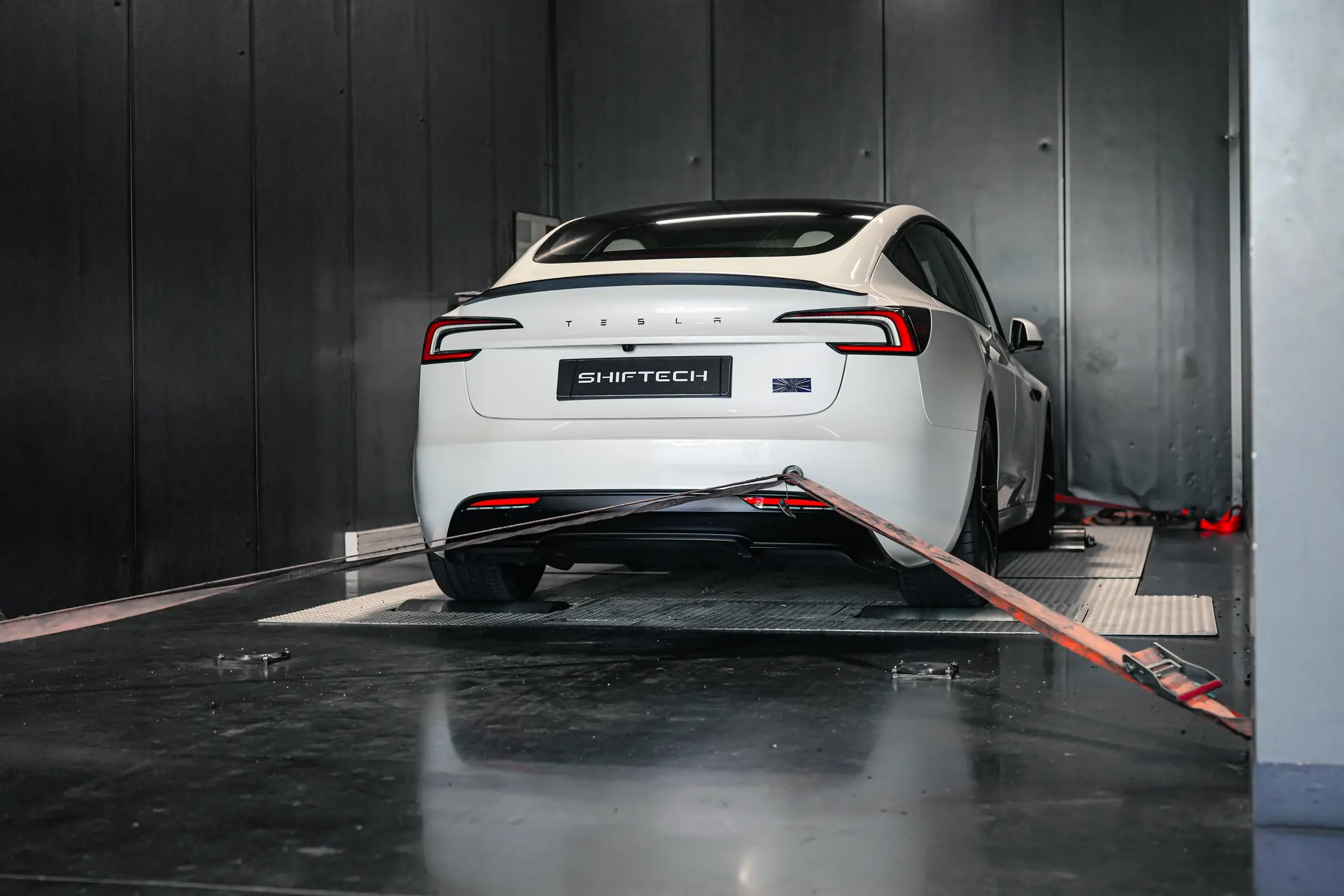
Ethanol
Why drive a car converted to E85?
What is superethanol-E85?
Superethanol-E85 is a fuel made from 65-85% plant-based ethanol (beet, wheat, maize) and 15-35% unleaded petrol. It is available from a growing number of service stations in France, with over 4,000 stations now distributing superethanol-E85, meaning that 93% of French people live within 10 km of an E85 station.
The price is particularly attractive: the weighted average price is around €0.75 to €0.76/litre at the start of 2026, compared with around €1.80/litre for SP95-E10. This is a considerable difference, representing savings of around 42%, or almost €700 a year for a motorist travelling 13,000 km, after taking into account a 25% increase in fuel consumption.
Thanks to its local production and controlled manufacturing costs, the price of E85 will remain comfortably below €1/litre in 2026, even against a backdrop of general inflation on fossil fuels.
In ecological terms, superethanol-E85 reduces net CO₂ emissions by an average of 50% and fine particles by up to 90% compared with fossil petrol.
By 2025, more than 418,000 drivers have already taken the plunge, while ethanol consumption in France has increased fivefold since 2018.
All motorists who own a petrol vehicle will need to convert to run on bioethanol.
How do you convert your car to E85?
There are two technical solutions for making a petrol vehicle compatible with E85:
The ethanol box
The ethanol box is an electronic module installed between the engine control unit and the injectors. It intercepts signals from the ECU and automatically adjusts the quantity of fuel injected according to the proportion of E85 in the tank. The vehicle can then run on SP95, SP98 or E85.
Its main advantage is that it allows official approval and modification of the vehicle registration document with the word "FE". On the other hand, it is an additional physical component, with no customised settings, and it costs more. prices start at €799 from Shiftech.
Ethanol reprogramming
Reprogramming consists of directly modifying the engine ECU mapping file to make it natively flexfuel. The engine now knows by itself how to adapt its operation according to the fuel in the tank, whatever the E85/SP95 ratio.
This is the solution we prefer at Shiftech: more precise, made-to-measure, and from €599 with the option of paying in several instalments from €49/month.
Box or reprogramming: how do you choose?
If you're still hesitating between the two E85 conversion methods, we've put together a comprehensive guide to help you decide: Box vs ethanol reprogramming, everything you need to know to make the right choice. You'll find a detailed comparison of the two solutions according to your vehicle, your budget and your expectations.
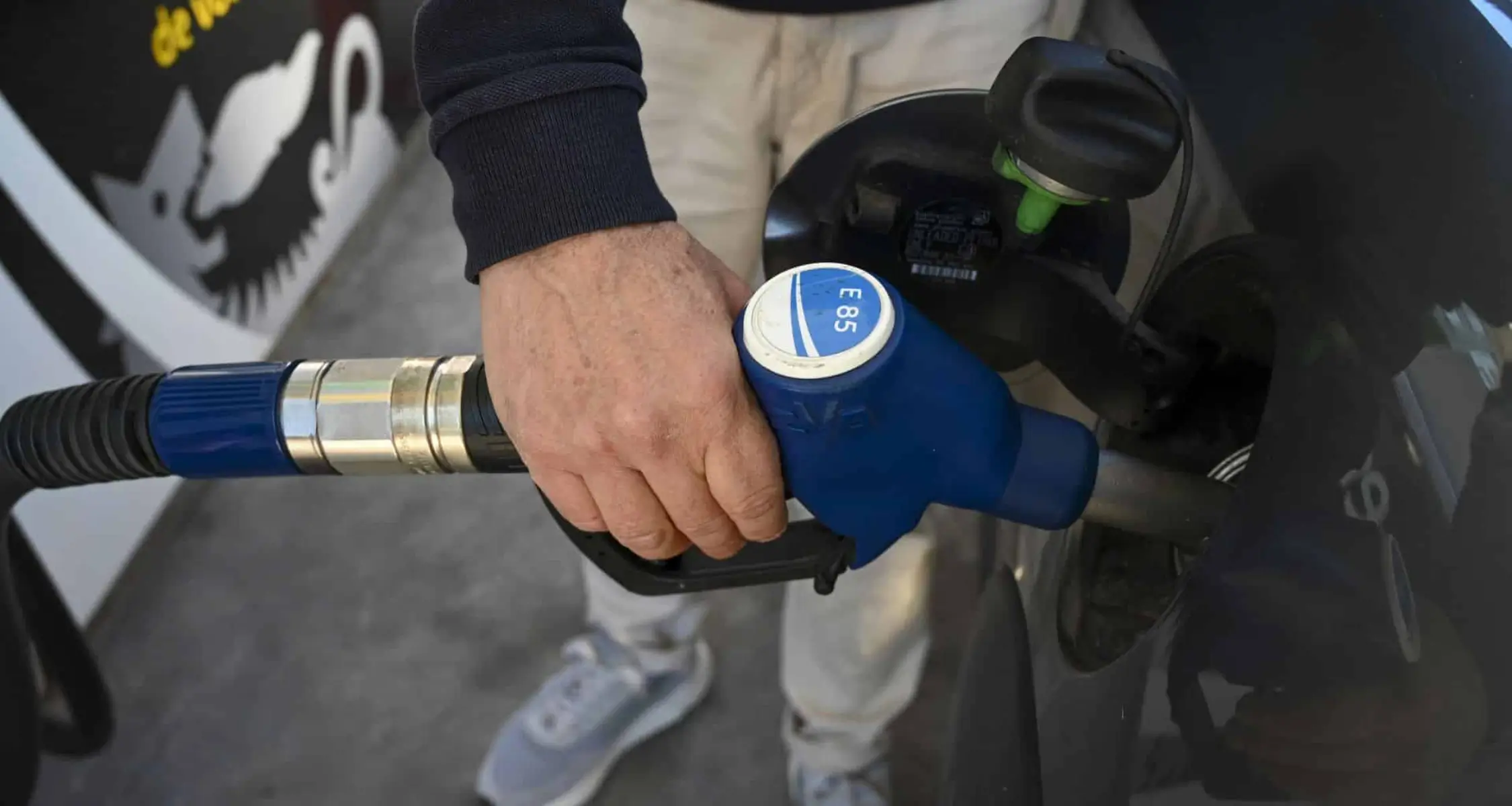
Electric vs E85
Direct comparison: electric VS E85
The cost of purchase or conversion
This is where the difference is greatest.
A new electric vehicle represents a major investment, generally between €30,000 and €60,000, or even more for top-of-the-range models. Even taking into account the environmental bonus, the initial financial outlay is still substantial.
conversely, conversion to E85 bioethanol by reprogramming (Shiftech type) starts from €599. For the equivalent of a few tankfuls of fuel, you can convert your current vehicle to flexfuel and immediately reduce your fuel budget.
For motorists who already have a petrol vehicle, the investment is therefore much lower than buying an electric vehicle.
Cost per kilometre
The difference in cost depends very much on the recharging method used for electric vehicles.
Electric vehicles have a clear advantage in terms of cost per kilometre when the majority of charging is done at home. In this case, it is the most economical solution to use.
However, this advantage diminishes sharply when you regularly use public charging points or fast-charging networks such as those offered by Tesla. On the motorway or on long journeys, the cost can approach or even equal that of a petrol vehicle.
For its part, E85 bioethanol offers an interesting compromise:
- lower cost per kilometre than conventional petrol
- price stability
- and, above all, a very low initial investment
| Solution | Estimated cost per 100 km |
| electric (home recharging) | ~2,5 à 4 € |
| electric (public charging points) | ~5 à 9 € |
| electric (fast superchargers) | ~6 à 10 € |
| E85 after conversion | ~4,5 à 5,5 € |
| SP95 petrol | ~8 à 10 € |
Range and long journeys
On this point, E85 is the clear winner. A flexfuel vehicle can be refuelled in 3 minutes at any petrol station offering the fuel, and its range is identical to that of a standard petrol vehicle (with a slight reduction in fuel consumption).a flexfuel vehicle can be filled up in three minutes at any petrol station offering the fuel, and its range is identical to that of a standard petrol vehicle (with a slight 20-30% increase in fuel consumption due to the density of the ethanol, offset by the much lower price of the fuel).
Electric vehicles, on the other hand, require you to plan charging stages for long journeys, with stopping times that are impossible to avoid.
The choice
Which solution is right for you?
If you drive less than 10,000 km a year
E85 conversion is the most appropriate solution. The amortisation of a new electric vehicle will take a long time with low annual mileage. Ethanol reprogramming costs from €599 and willpay for itself in less than a year, saving you money on each fill-up.
If you drive a lot (more than 20,000 km/year)
Both solutions make economic sense. If you already own a compatible petrol vehicle, converting to E85 will give you immediate and significant savings. If you're thinking of buying a new vehicle, electric may be a good option, provided you can recharge easily.
You can recharge at home
This is the decisive factor in favour of electric cars. Having a plug or wallbox at home removes the main constraint of electric mobility and maximises savings. In this case, electric makes perfect sense for everyday journeys.
You live in a flat or condominium
Charging at home is complicated, if not impossible, in many apartment blocks. In this context, E85 conversion is much simpler to set up: no infrastructure to install, no negotiations at the general meeting, no dependence on public charging points.
You already have a compatible petrol car
This is the simplest case. If your petrol vehicle is compatible with ethanol reprogramming (the vast majority of post-2001 petrol engines are), there's no reason to change cars. A Shiftech reprogramming from €599 will convert your current vehicle to flexfuel in just a few hours, with a return on investment from the first year.
You want to reduce your fuel budget immediately
E85 reprogramming is undoubtedly the quickest and least expensive way to act now, without waiting for several years to pay off. From your first tank of E85, you'll save money.
Conclusion
Eletric car or E85 conversion?
If you already own a compatible petrol vehicle, want to reduce your fuel bill quickly without changing your car, and make a variety of journeys including long distances, ethanol E85 reprogramming is the most cost-effective, simple and immediate solution.
At Shiftech, this is the solution we prefer and recommend to the majority of our customers: from as little as €599, it pays for itself in less than a year, with no physical components added, no complications at the roadworthiness test, and optimised engine performance.
You don 't need to change cars to change fuel and save money.
Learn more
View articles
Similar


