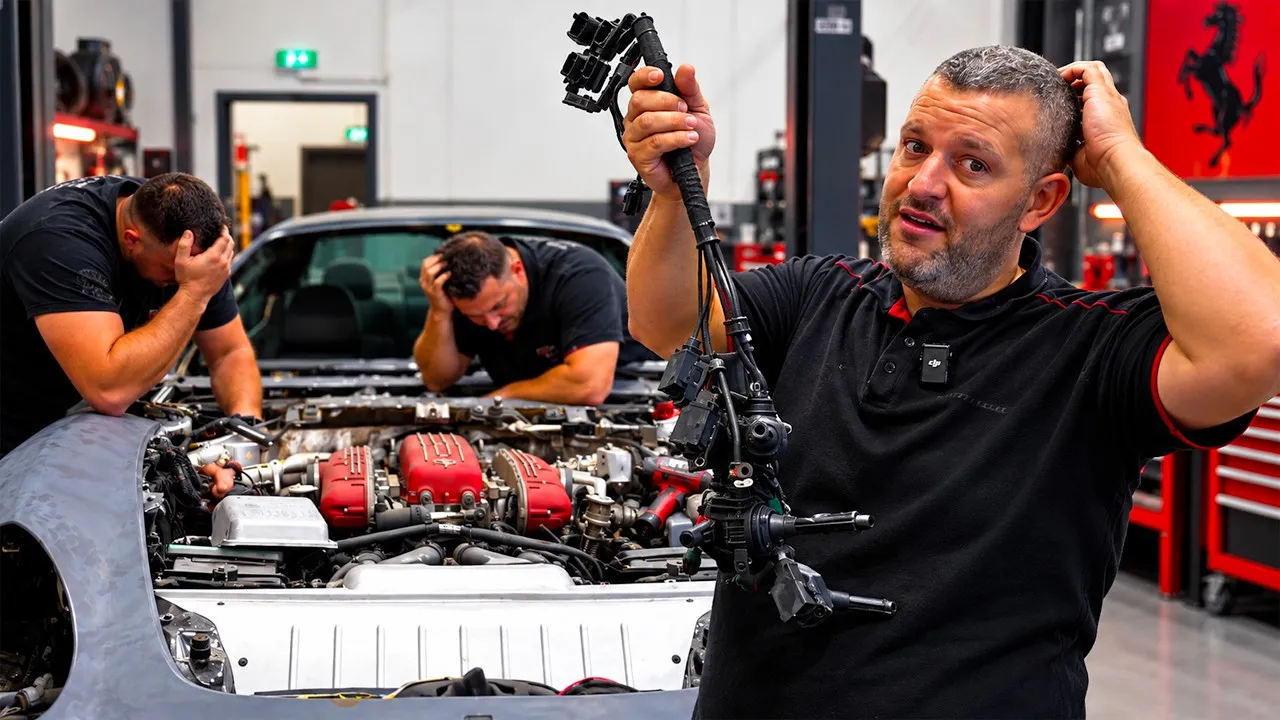
Ferrari 612: spark plugs, ignition coils and oil change (the work continues)
The first stage of this project had laid the foundations: a diagnostic check, 17,000 euros’ worth of genuine Ferrari parts, a broken timing belt, a leaking gearbox, and fluids dating back to 2016. This second phase tackles the ignition system: 12 spark plugs, 12 ignition coils, a wiring harness to be rebuilt, and a job that requires lifting the intake manifold to gain access. Next up is the oil change for the engine, rear axle and gearbox, and we’ve finally received the part that had been holding up the brake reassembly from the start. The project is progressing, and the test run is imminent.
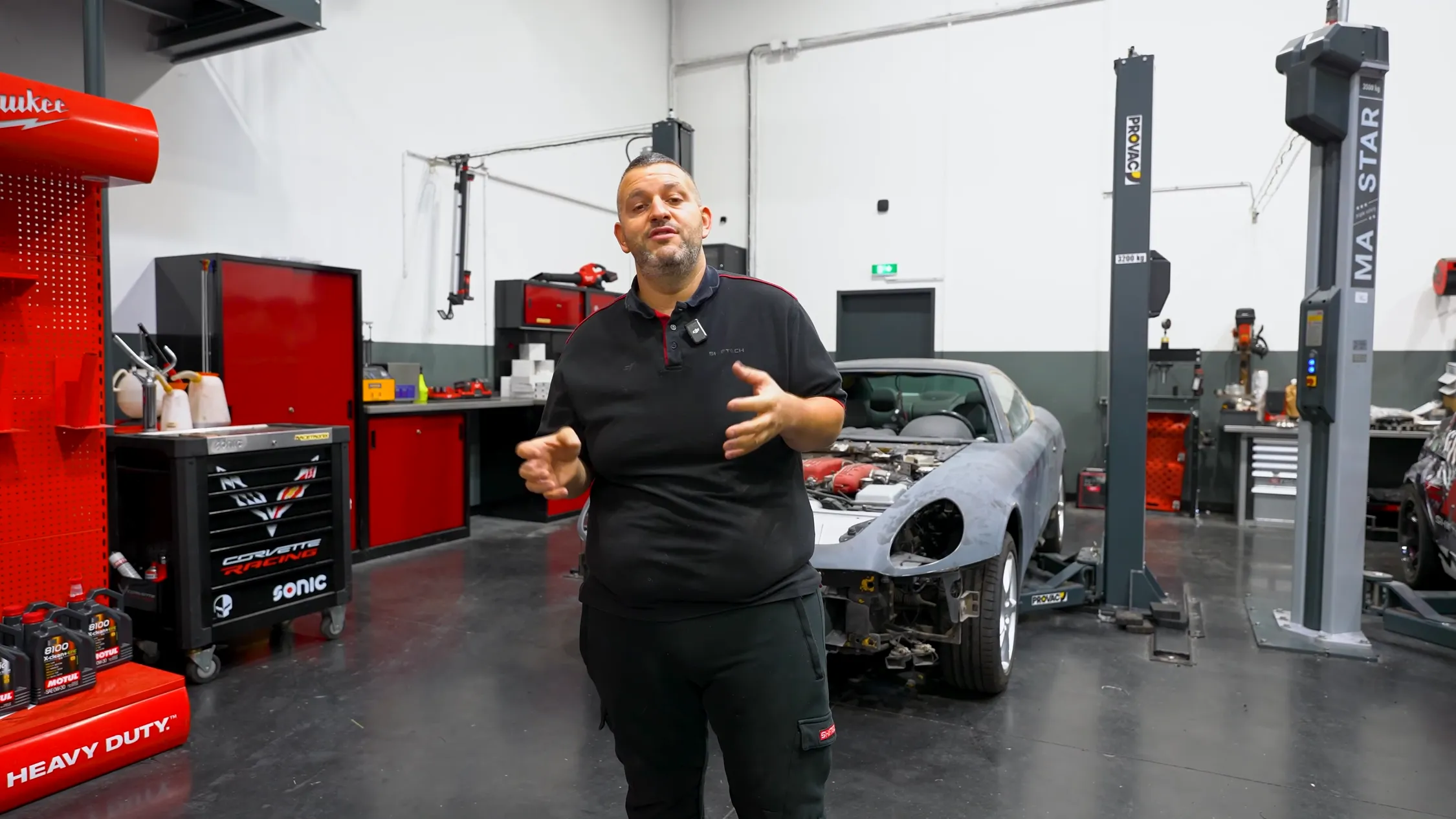
Why the coils in a Ferrari 612 can’t be changed in five minutes
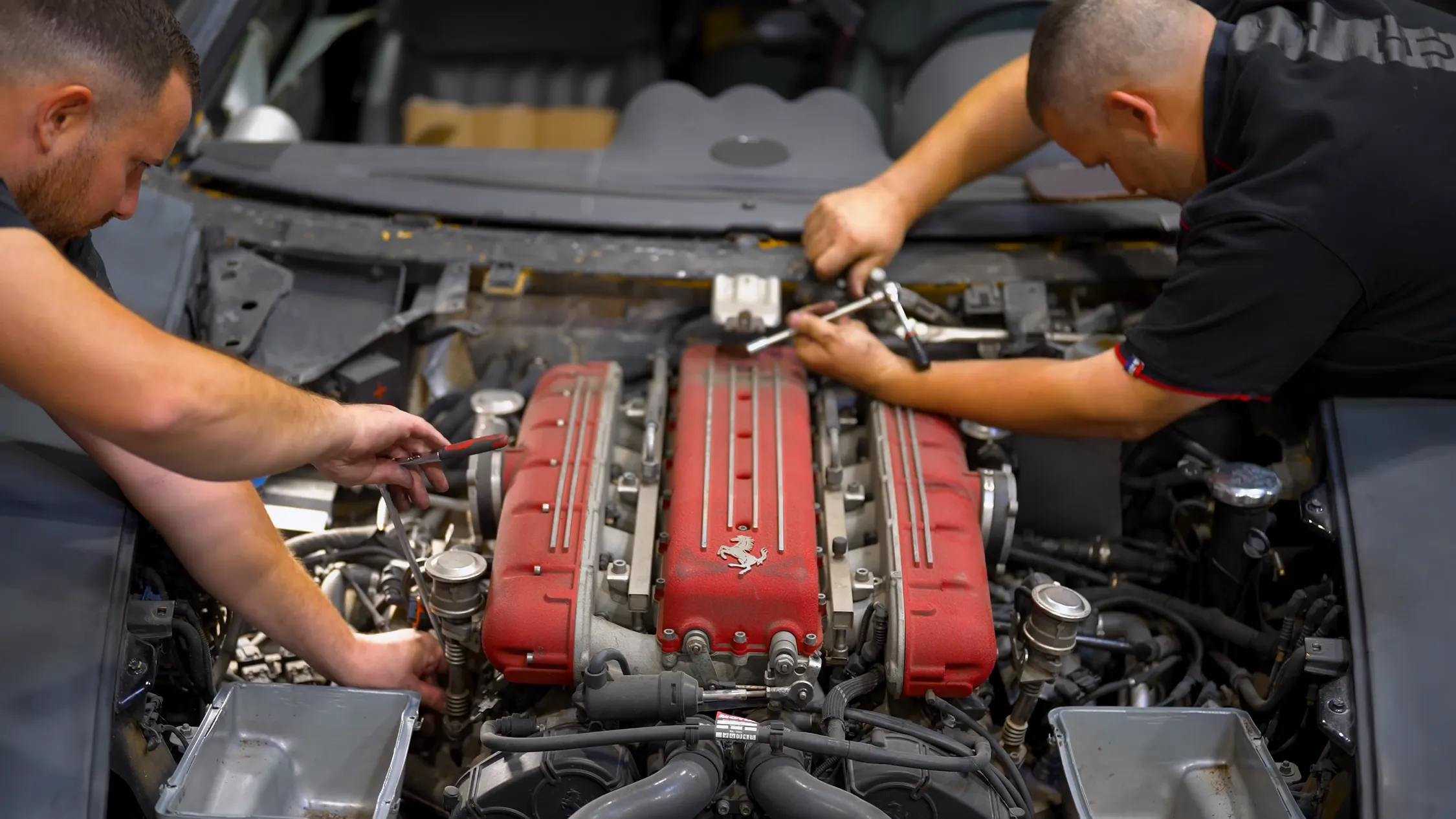
On a standard engine, changing the ignition coils takes an hour. On the V12 in the Ferrari 612 Scaglietti, the same job starts with figuring out how to get to them.
The engine bay is crammed full. On either side of the V12: the windscreen wiper motor, the brake fluid reservoir, the EGR valve, the throttle body and all manner of hoses. You can’t simply reach in and pull out a coil.
The solution: lift the plenum – that is, the intake manifold – after moving the EGR valves aside and removing the throttle body, leaving the hoses in place so as not to disrupt the cooling circuits. Once the manifold has been lifted, the twelve intake manifolds are revealed and the twelve coil housings become accessible.
A second subtle feature specific to this generation is that the coils are not all identical. Their connecting wires are offset, originally numbered by Ferrari, and vary in length depending on their position on the V12 (cylinders 1 to 6 on one side, 6 to 12 on the other). Before cutting the connectors and undoing the tangle of wiring. Upon reassembly, the wiring harness is rebuilt identically, coil by coil, to the correct length.
What the candles left behind have taught us
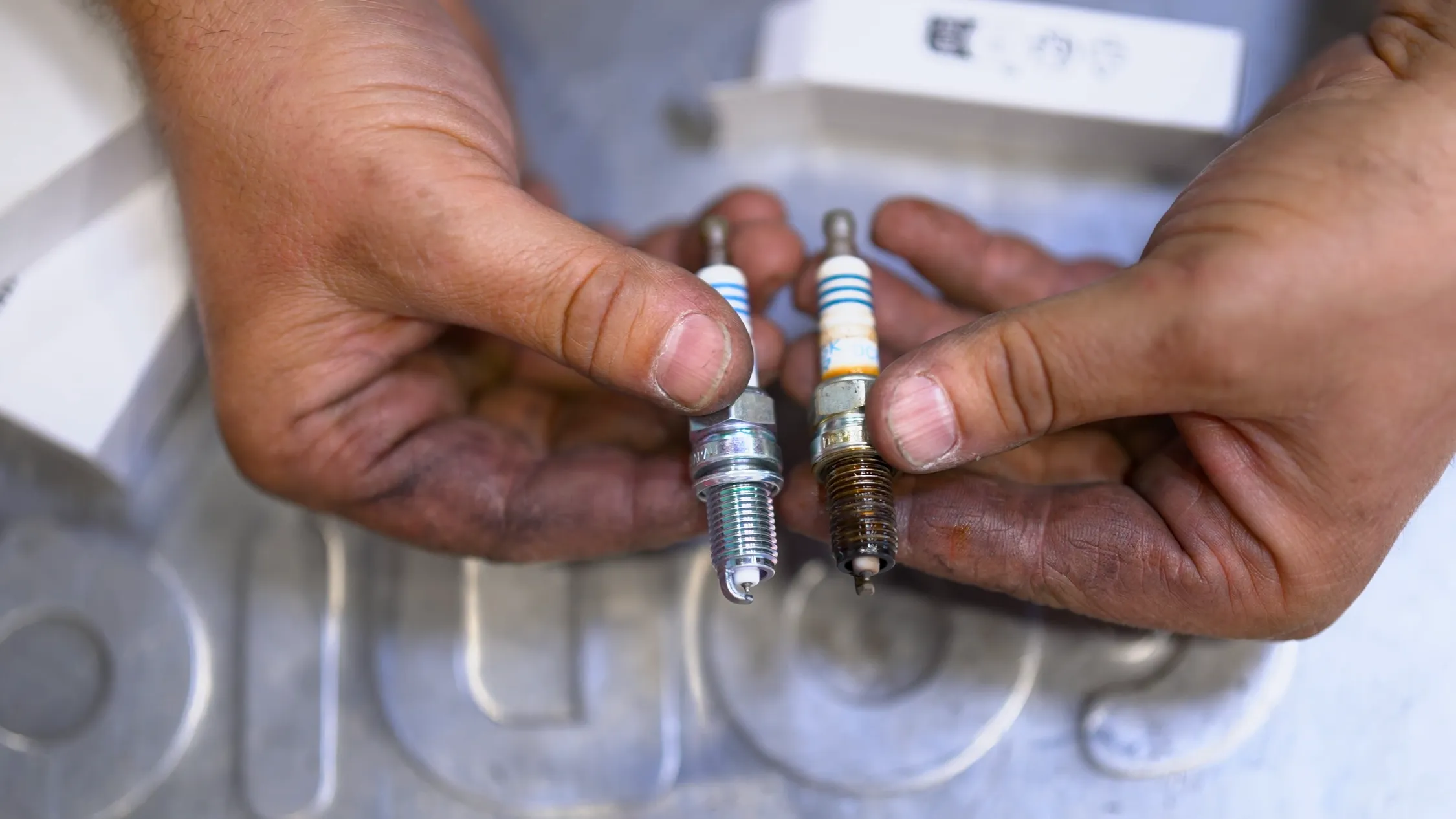
The twelve NGK spark plugs came out clean: no broken electrodes, no suspicious deposits. These are original spark plugs, and a few of the wells contain a little oil – something to keep an eye on at future service intervals.
Before fitting the new spark plugs, we always check two things.
Firstly, the part number. Suppliers sometimes send the correct part number but with a slightly different thread pitch or thread length. We check the part number, length and socket pattern on each spark plug before fitting.
Next, the gap. The gap is the distance between the two electrodes, where the spark is generated. A gap outside the tolerance range directly impairs combustion. On a naturally aspirated engine with a high compression ratio, such as this V12, the consequences are immediate: the knock sensors detect abnormal combustion, the ECU reduces the ignition timing in response, and performance drops. In a turbocharged engine, the effect is even more severe: under high boost pressure, an insufficient spark causes the spark plug to blow out, combustion fails to ignite, and the engine misfires. In the most serious cases, a spark plug can melt inside the cylinder and destroy the engine.
The gap on each spark plug is checked using a set of shims.
Changing the oil in a dry-sump V12: 13 litres and a precise procedure
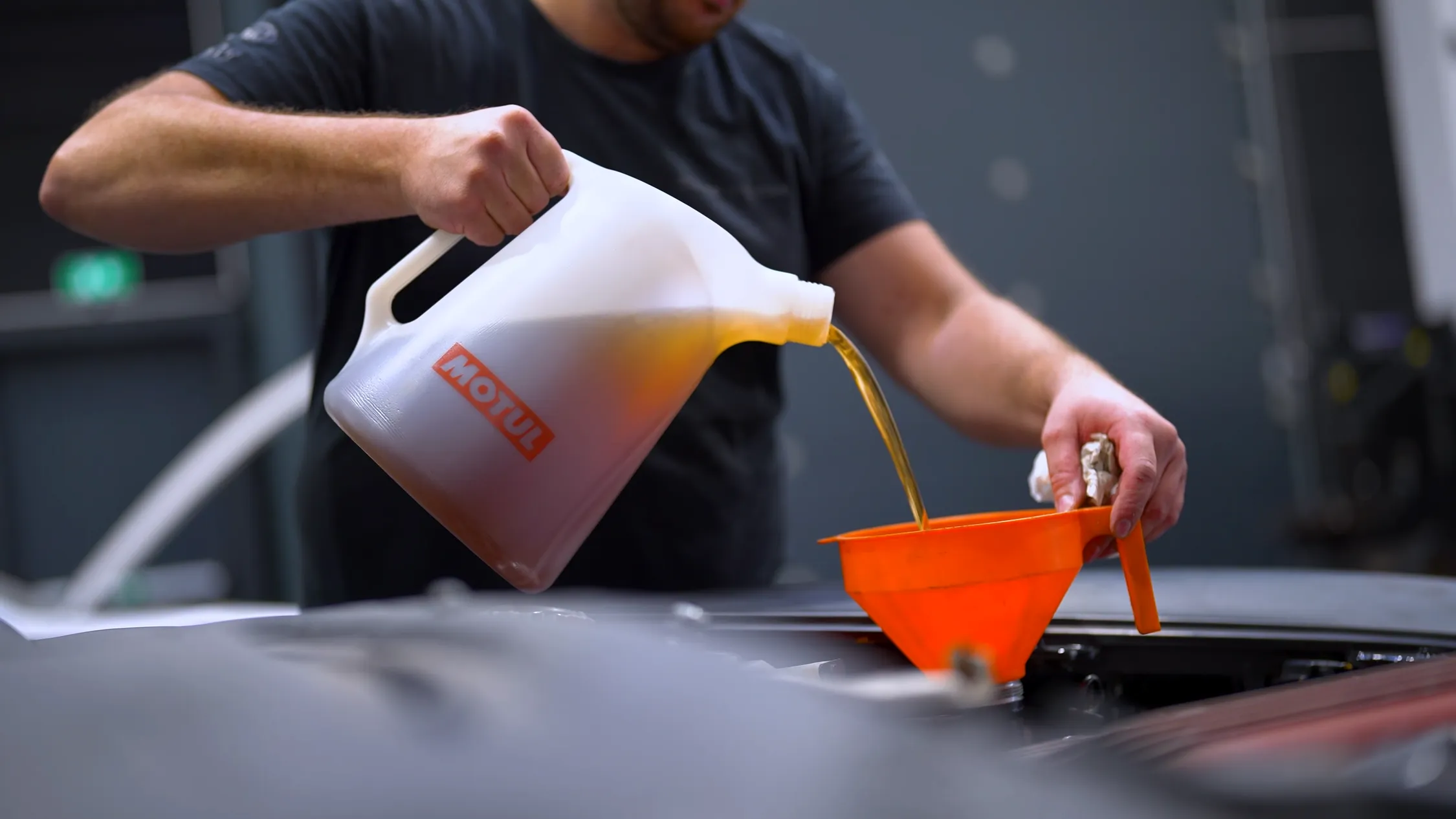
Whilst the spark plugs and coils are being replaced, Morgan takes charge of the oil changes. There are three circuits on this 612: the engine, the rear differential and the gearbox.
Changing the engine oil in a dry-sump system isn’t done in the same way as on a conventional engine. The oil is stored in a separate reservoir, and that’s where the work takes place. It is topped up to the exact volume: on the 612, that amounts to 13 litres of Motul 8100 X-cess Gen 2 5W-40. There is no room for approximation when it comes to the quantity; an insufficient level on this type of circuit directly exposes the engine to dry-running (the details of how the dry sump system works are explained in the first part of this project).
The rear differential and gearbox are filled with their respective fluids: Motul Gear 300 75W-90 and Motul Multi ATF. The leak on the hydraulic selector unit, which was identified on arrival, is dealt with whilst we’re at it: seal replaced, fluid topped up to the correct level, and checked for leaks.
Brakes: a caliper piston was missing
The 612 had been brought onto the platform because the brakes weren’t working: the calipers had been removed and repainted, but refitted without their pistons. Lucien had kept one of them for a reason that escapes us.
The part arrived whilst work was in progress. The calipers have been refitted with new seals, and the brake pads fitted. The brakes are scheduled to be bled during the next session. The car can now be moved.
What this project confirms about preventive maintenance
Two things stand out from this job, which apply to any petrol engine.
Spark plugs and ignition coils are wear-and-tear parts, not components that you only replace when the engine refuses to start. Poor combustion affects performance before it leads to a breakdown. On a vehicle that you wish to have remapped, or which has just been remapped, the condition of the ignition system directly affects the result. An optimised ECU fitted to spark plugs that are at the end of their life will not perform to its full potential.
Maintenance of gearbox and differential fluids is not optional either. The leak identified in the F1-A gearbox of this 612 was directly linked to a dried-out seal caused by the fluid not having been changed for years.
YouTube video
MAINTAINING LUCIEN BOISERIE’S FERRARI IS A NIGHTMARE! (The cheapest in France)

Shiftech Drift Series Season 2: come and drive the E90
Learn more
View articles
Similar


