
Laboiserie’s Can-Am Maverick RXRS: chiptuning, unlocked ECU and bench test results
For a long time, Can-Am owners faced a clear limitation: the new-generation engine control units could not be remapped. This restriction has now been lifted. At Shiftech, we can now work on the entire Can-Am range, including the very latest models. To illustrate exactly what this means in practice, we took Lucien’s Can-Am Maverick X3 RXRS – which you may know better as ‘La Boiserie’ – to the dynamometer: with a factory-rated output of 240 hp and 240 Nm, it now produces 270 hp and 270 Nm following remapping. In this article, we explain what has changed in terms of the ECU, what we’ve worked on with the mapping, and why your Can-Am is very likely a candidate for tuning at Shiftech today.
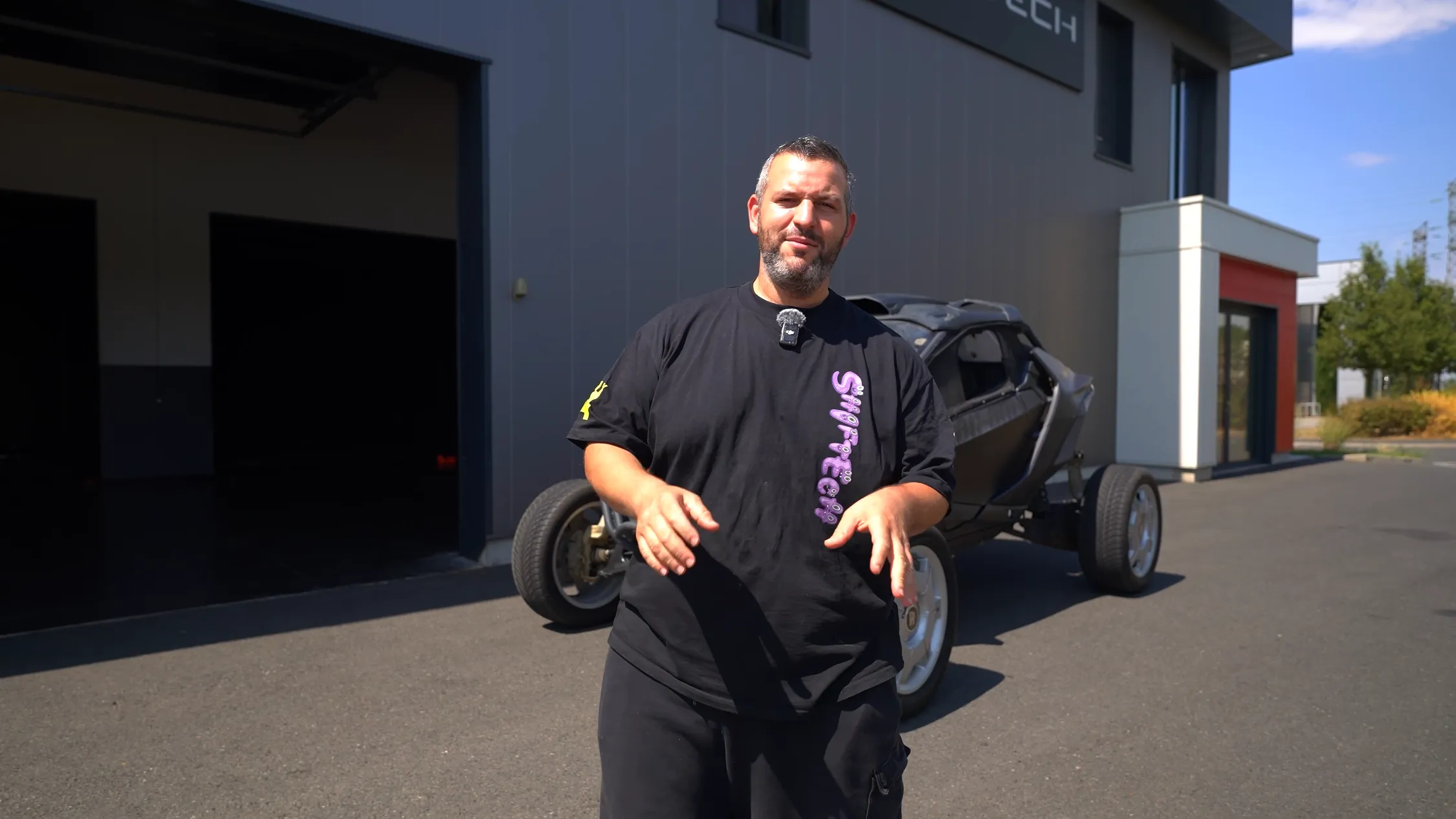
A Can-Am Maverick X3 RXRS on the dynamometer
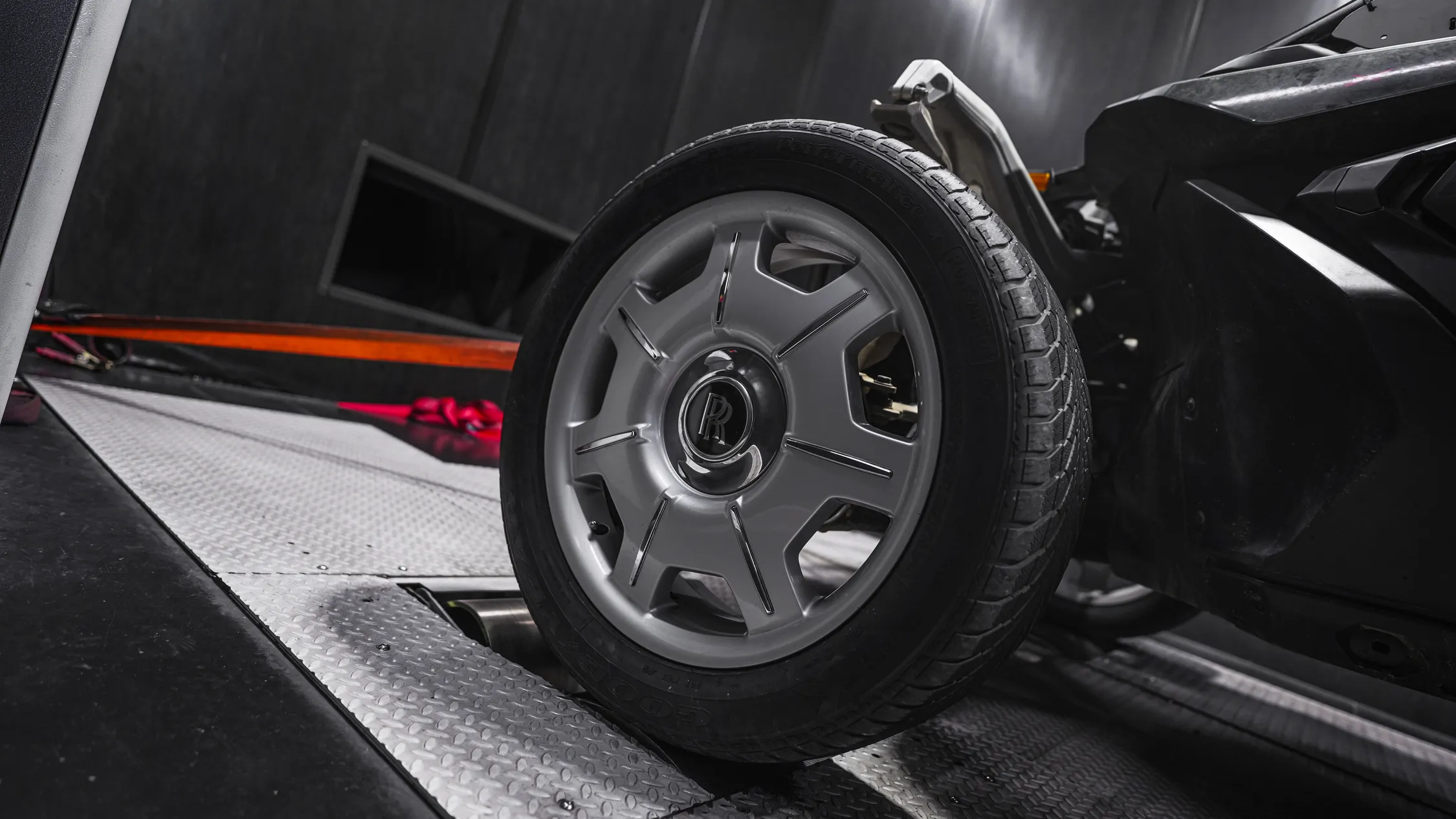
Lucien La Boiserie’s Maverick RXRS certainly didn’t go unnoticed at the center. Powered by a turbocharged 900 cm³ Rotax 3-cylinder engine and fitted with a 7-speed sequential gearbox, it is rated at 240 hp as standard. So far, nothing out of the ordinary on paper. Except that Lucien chose to fit the original wheels from his Rolls-Royce, with the wheelbase adapted accordingly. The result: an off-road buggy running on rims from a luxury saloon, with an overall diameter close to that of the original cross-country tires.
On the test bench, the Maverick X3 RXRS’s track width pushes the limits of standard dimensions. The set-up required some adjustment, but we were able to calibrate it in 6th gear (7-speed gearbox), which allowed us to reach 149 km/h before the rev limiter kicked in, at around 9,000 rpm.
Can-Am ECUs: what’s changed
Until recently, the engine ECUs on the new-generation Can-Am models could not be programmed. It was impossible to develop a map for them, even with the latest professional-grade equipment. This was the same situation we’d seen with certain recent BMWs, Audis, Porsches, Urus and even Fords.
This is no longer the case. Can-Am ECUs can now be programmed directly, without an intermediary, and the mapping is developed on a dynamometer just like for any other vehicle.
What applies to the Maverick X3 RXRS applies to the entire range: Maverick X3 RS, Outlander, Renegade, Commander and Ryker.
If you contacted a Shiftech centre a few months ago and were told that your Can-Am could not be modified, that information is now out of date.
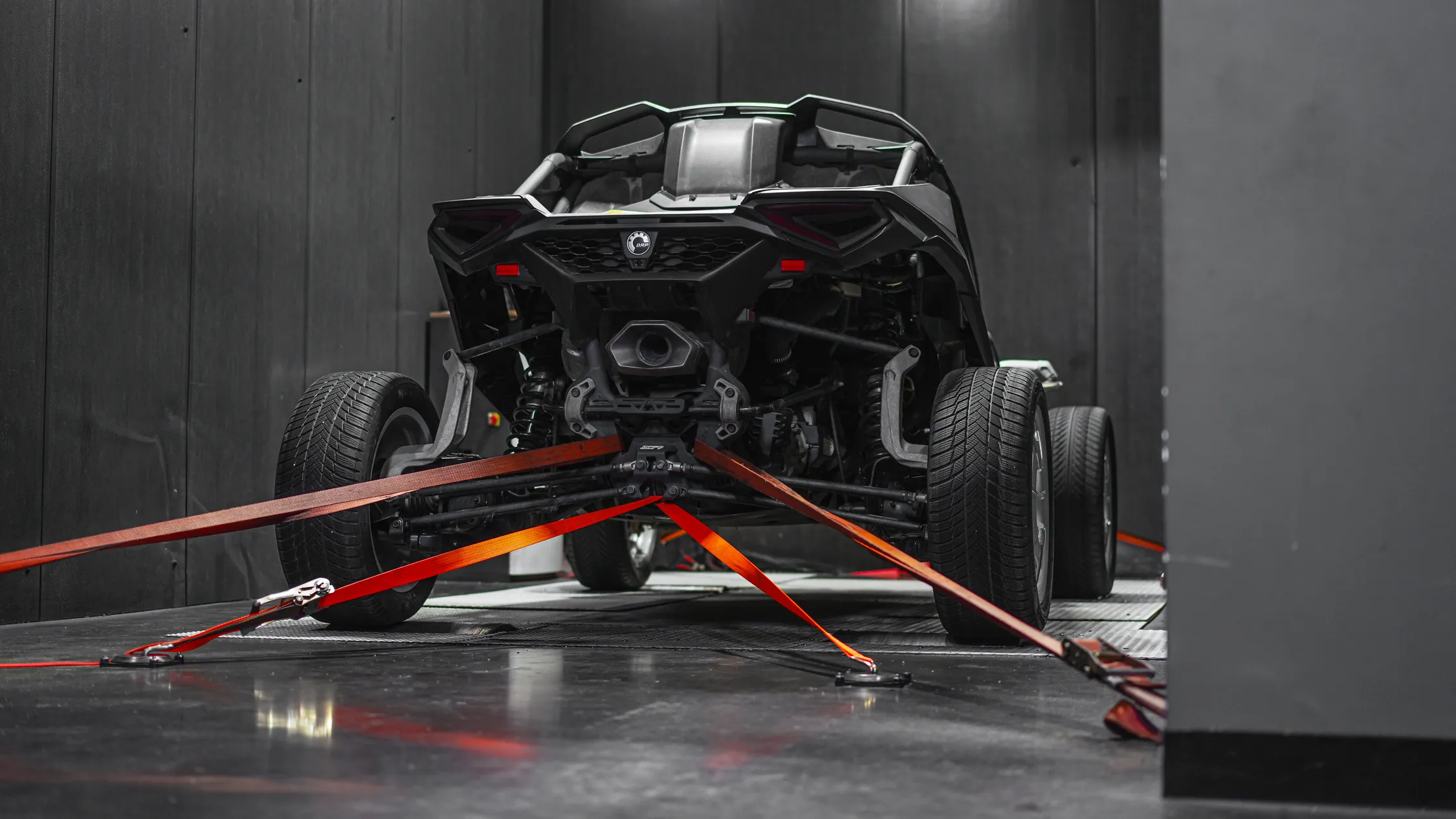
Bench test results: before and after mapping
The bench test took place in challenging hot conditions: 38 °C in the hall in the middle of the afternoon, with roof ventilation drawing in air that was already hot. Real-world conditions, robust results.
| Pre-mapping | After mapping | Gain | |
|---|---|---|---|
| Power | 240 hp | 270 hp | +30 hp |
| Torque | 240 Nm | 270 Nm | +30 Nm |
The parameters adjusted: turbo pressure and ignition timing, whilst remaining within the engine’s mechanical tolerances. The curve is clean, and the power-to-torque ratio remains perfectly balanced.
The 7-speed sequential gearbox presented no issues on the test bench: smooth shifting into neutral, and revving up without vibration. Lucien’s Maverick X3 RXRS is in excellent mechanical condition.
What mapping actually changes
Beyond the figures, what Lucien will notice behind the wheel is, first and foremost, the torque’s responsiveness. The 30 Nm increase across the entire rev range means more responsive acceleration and a gearbox that no longer needs to be worked as hard to maintain speed on rough terrain. In 6th gear, with the rev limiter at 9,000 rpm, the Maverick was already reaching 149 km/h: with the remapped ECU, the upper rev range is better utilised and more readily available.
This is exactly how Lucien intends to use this vehicle: on the castle grounds, a few upcoming track sessions, and in conditions where instant torque makes all the difference.
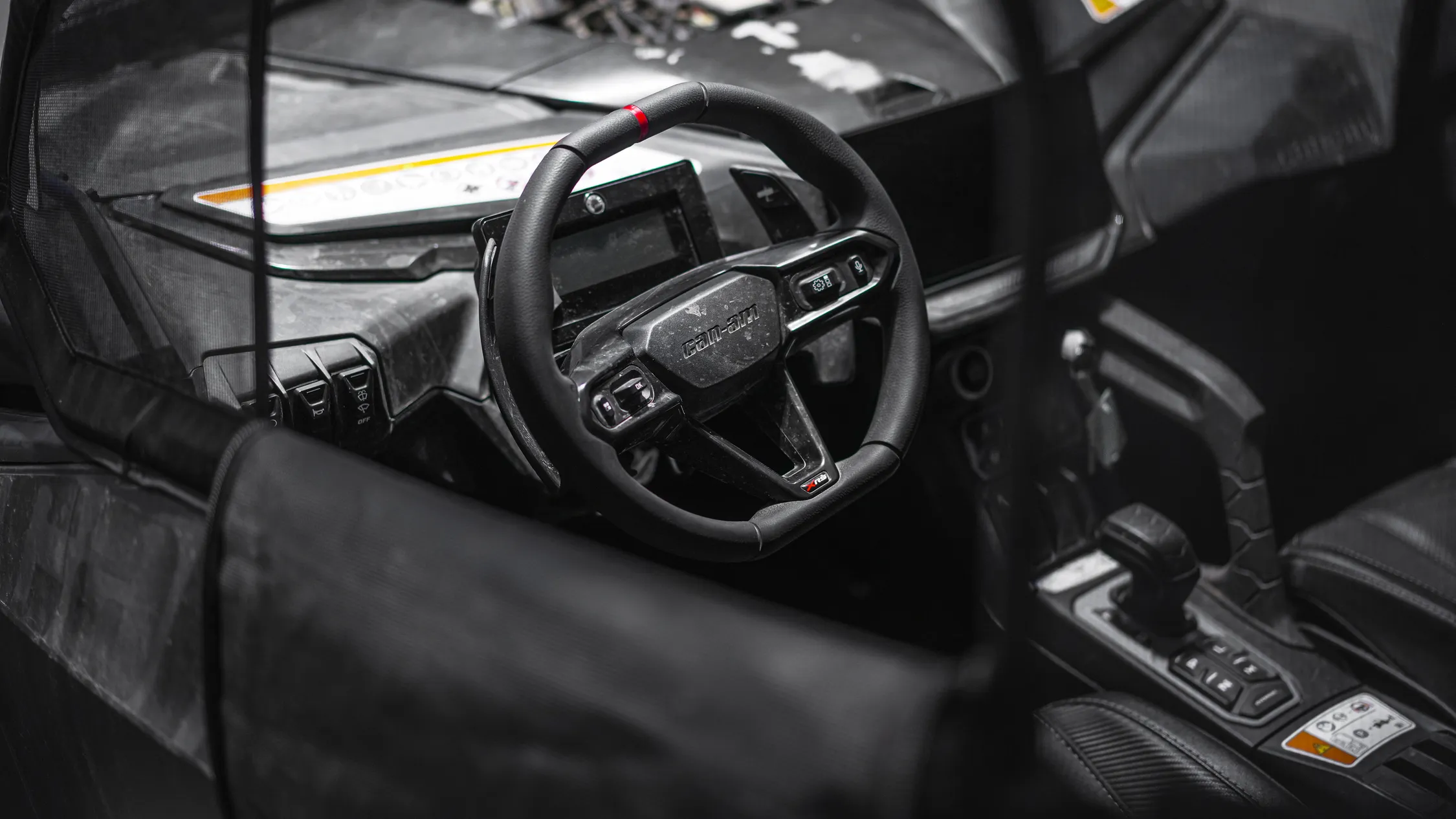
The entire Can-Am range is now available from Shiftech
YouTube Game
LUCIEN’S CAN-AM WITH ROLLS WHEELS IN STAGE 1! (It sticks out beyond the bench...)
Learn more
View articles
Similar


