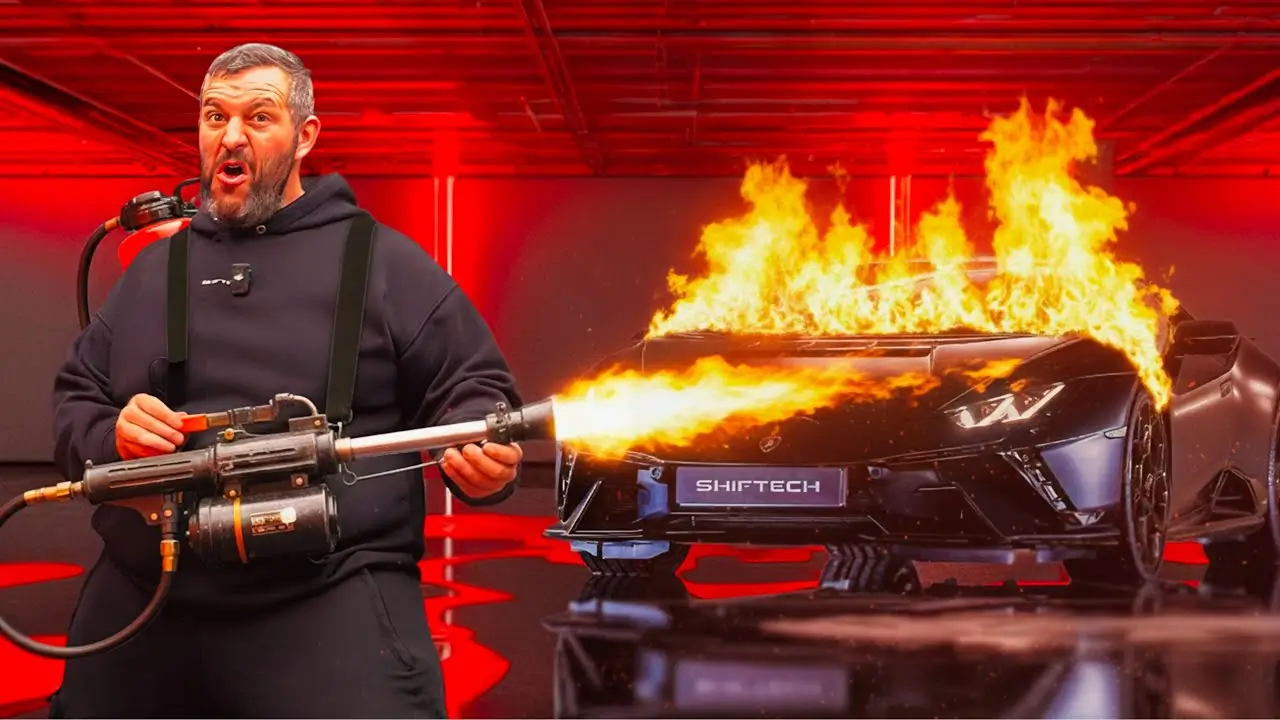
PPF protective film: Extreme test on our Lamborghini Huracán Technica
How effective is a paint protection film against the rigours of everyday life? At Shiftech, we decided to push PPF to its absolute limits. Keys, screwdrivers, wire brushes, spray paint and even being set alight. Our Lamborghini Huracán Technica was put through its paces. Here are the results of this no-holds-barred test.
An important point to note before we begin
At Shiftech, we test our products under real-world and extreme conditions to ensure complete transparency. If you’d like to see our full price list – whether for a front panel, full protection or a style change – all detailed prices are available directly on our website.
PPF: that invisible protection that makes all the difference
Paint protection film (PPF ) has become essential for maintaining a vehicle’s condition. Made from polyurethane, this transparent or tinted film, which is between 160 and 250 microns thick, is applied directly to the paintwork and absorbs impacts instead of the bodywork.
Contrary to popular belief, PPF isn’t just for supercars: new vehicles, classic cars, commercial vehicles, 4x4s and motorbikes can all benefit from it.
The practical benefits of PPF film
- Multi-level protection: scratches, stone chips, UV rays, chemical splashes and bird droppings.
- Self-healing: micro-scratches disappear with heat.
- Simplified maintenance: water-repellent effect, easy cleaning.
- Aesthetic customisation: gloss, satin, matt, carbon fibre.
- Durability: up to 10 years without significant deterioration.
On our Huracán Technica, we opted for full satin protection, transforming its original gloss black finish into a deep, elegant black.
Important note: pre-cutting – a key step in a professional installation
Why use pre-cut film?
The PPF is cut to size before application using a plotter. The film is cut precisely to the contours of the vehicle: bonnet, wings, bumpers, wing mirrors…
“There are several types of installation. Pre-cut. So basically, a pre-cut is… we have a plotter here, which cuts the film perfectly to fit the bonnet with the correct clearances and everything. We prefer to use pre-cut film. It means we don’t have to use a craft knife on your car.”
The advantages
- No craft knife on the bodywork: no risk of accidental scratches.
- A clean and reliable fit: the film conforms perfectly to the contours.
The natural drawback of pre-cut film
This method of application can sometimes leave a tiny unprotected edge (<1 mm).
‘Often, you’ll have edges… less than a millimetre wide… that aren’t protected.’
But this area is never the one most likely to suffer damage: you always scratch the middle of a panel, never the tiny lower edge of a wing.
Why Shiftech favours pre-cutting
The ‘full wrap’ method (where the film extends behind each panel) may seem more aesthetically pleasing, but:
- it creates more tension,
- it increases the risk of the film peeling away,
- it leads to more after-sales service.
Pre-cut film, on the other hand, guarantees:
- excellent durability,
- a neat and precise installation,
- perfect edge adhesion.
That is why we use it in the vast majority of cases.
The test protocol: how much can the PPF withstand?
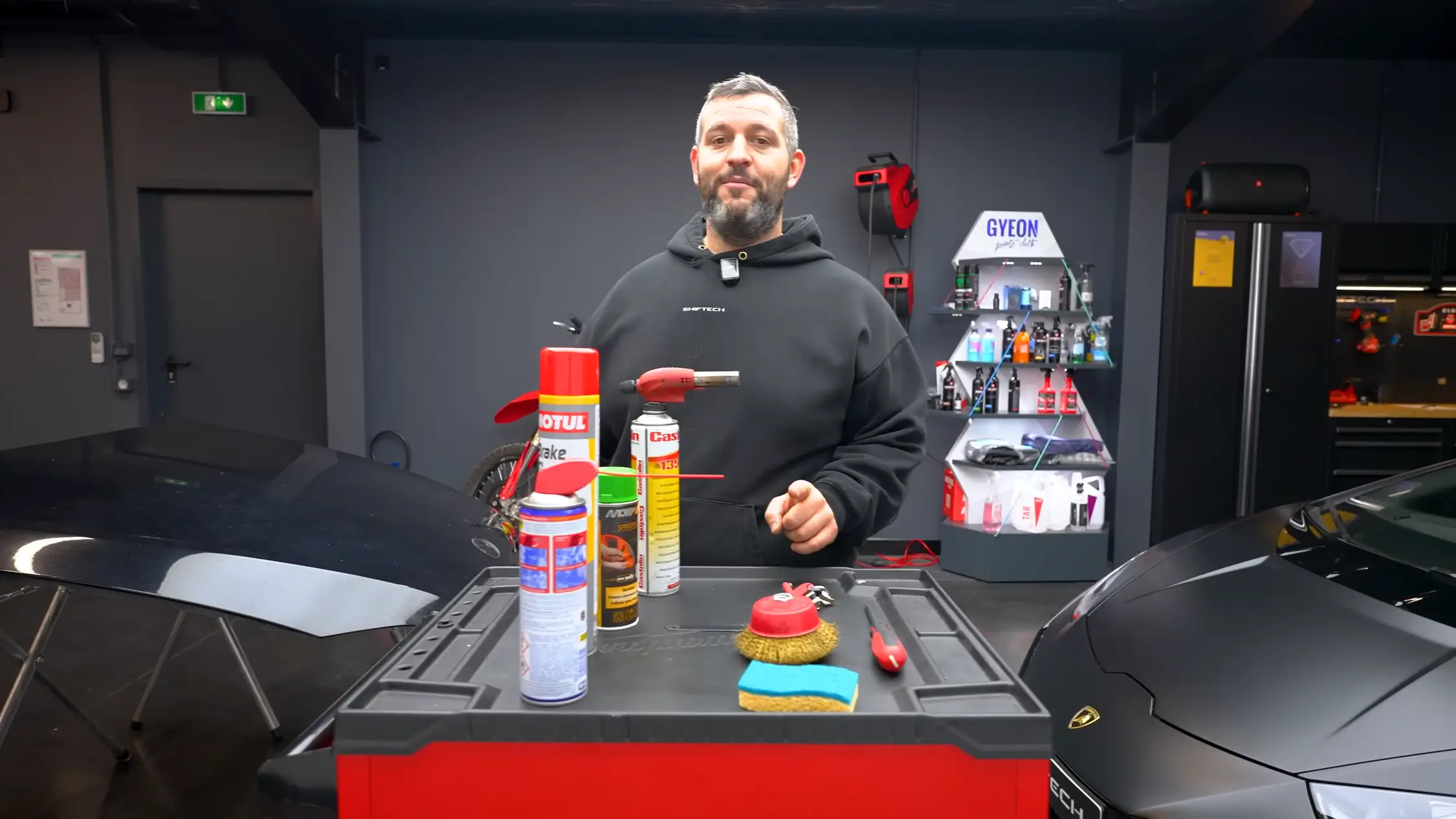
To assess the effectiveness of the clear car body protection film, we compared:
- The bonnet of a BMW 335i without protection, 150,000 km.
- The carbon-fibre bonnet of the Lamborghini, covered with PPF.
Each form of damage was applied simultaneously to both surfaces.
Mechanical damage
Key test: deep scratches on the BMW; superficial marks on the PPF.
Screwdriver: the BMW’s paintwork is immediately damaged. The Lamborghini’s film absorbs the pressure.
Wire brush: the sound of the impact is alarming… but the marks on the PPF largely disappear with heat.
Animal claws: on bare paintwork, the damage is irreversible; on PPF, only superficial marks.
Abrasive sponge: once again, the paintwork suffers, but the film remains unaffected.
Chemical & thermal damage
Spray paint: a nightmare on clear coat, but it comes off the PPF easily.
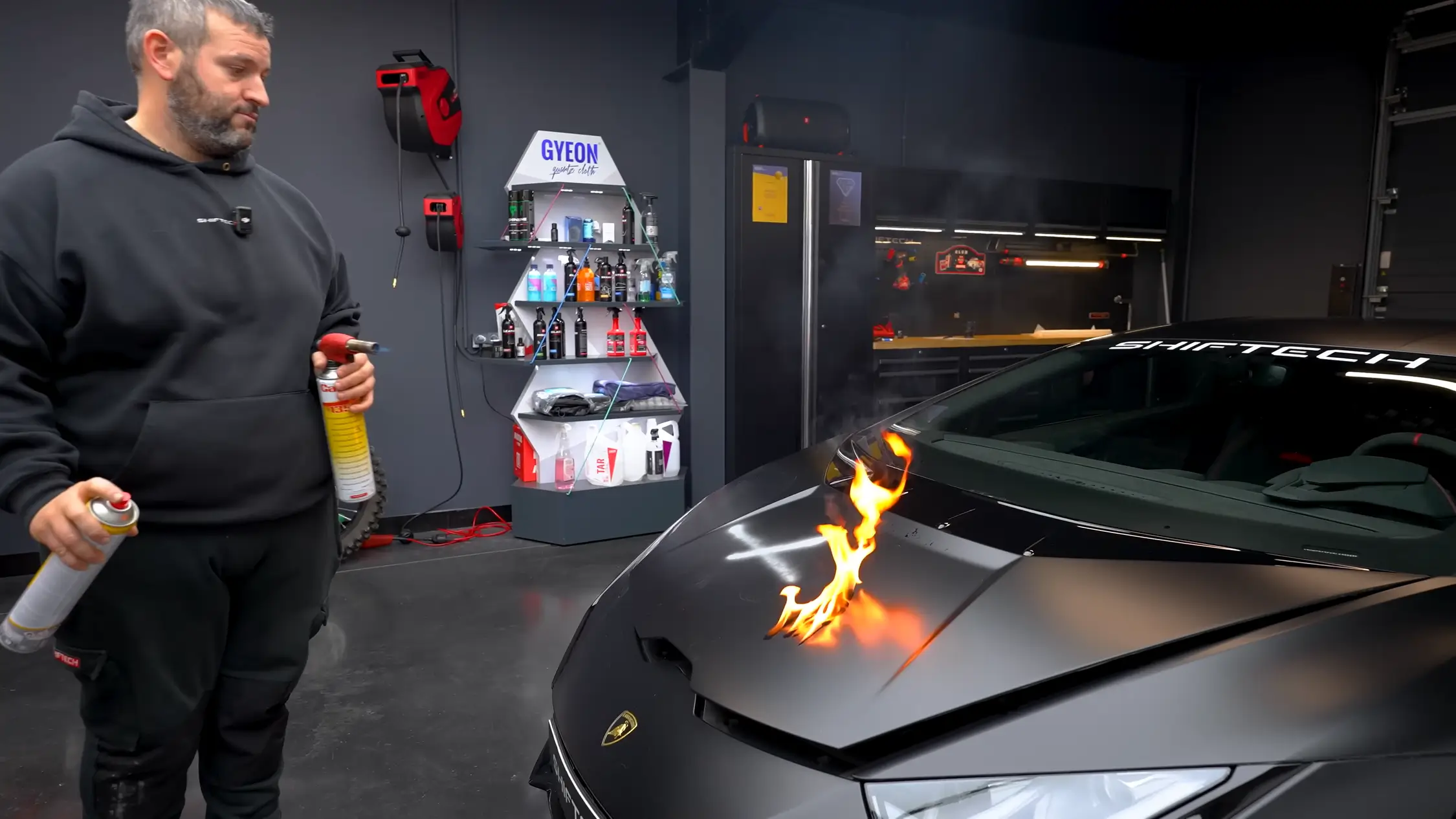
Fire test: the most extreme test. On the BMW bonnet, discolouration and deep marks. On the protected Lamborghini: no visible damage after cleaning.
Self-healing: myth or reality?
After exposure to the sun, the micro-scratches left by keys and the wire brush have faded. Polyurethane has shape memory: when heated, it shrinks and corrects minor deformations.
Deeper damage affects the surface of the film, but not the bodywork, which is precisely the role of PPF.
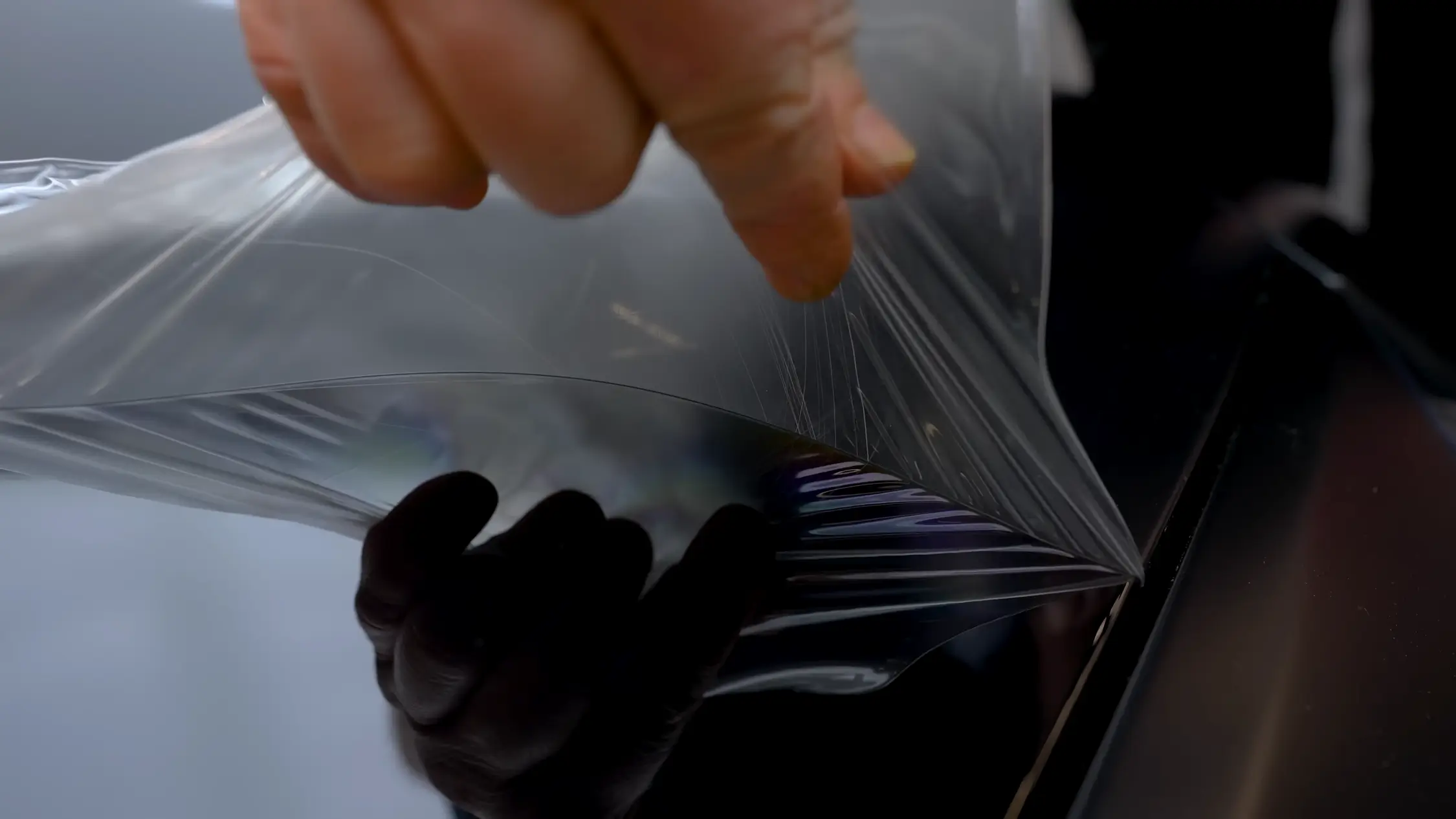
The moment of truth: the film’s withdrawal
After subjecting the film to extreme stress, removing it reveals a simple truth: the bodywork is intact.
No scratches. No burn marks. No discolouration. Only a few traces of adhesive need cleaning off. The contrast with the BMW bonnet, which is covered in deep scratches, is striking.
Verdict: PPF works and has established itself as the gold standard in bodywork protection
Having withstood mechanical, chemical and thermal stresses worthy of a disaster scenario without so much as a flinch, one thing is clear: PPF is not only effective, it pushes the boundaries of what can be expected from modern bodywork protection.
This film withstands what no paintwork could ever tolerate, absorbs the unimaginable, preserves the vehicle’s visual integrity and keeps its value intact. Where an unprotected bodywork becomes a battlefield, PPF emerges victorious, ready to face the challenge all over again.
- It withstands what no other treatment can,
- it protects the bodywork like invisible armour,
- it maintains the original appearance despite the worst forms of damage,
- it preserves a vehicle’s value like no other solution on the market.
At this level of resilience, we are no longer talking about mere protection: we are talking about the best bodywork defence available today.
Shiftech Beauty Services
The truth on video!
PPF protective film: Testing its durability on a Lamborghini! (I’m setting it alight)
Learn more
View articles
Similar


